EuroDaily News and Guidance, Every Day

Related Articles



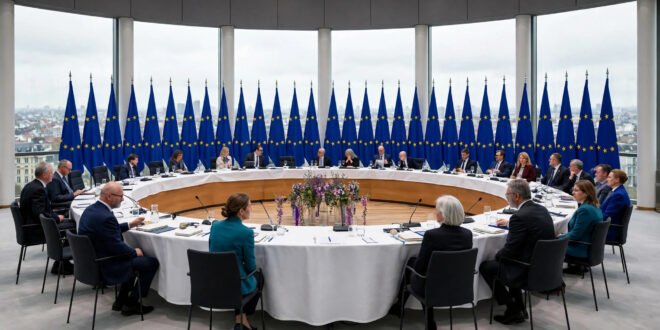
This week's EU budget summit is shaping up as the defining fight over Europe's money for the rest of the decade. Leaders of the 27 member states gather in Brussels on Thursday and Friday, 26 and 27 November, for a special European Council devoted to the Multiannual Financial Framework for 2028–2034 — and they arrive with the three institutions holding three very different numbers, and the European Parliament openly threatening to veto whatever emerges.
What the EU Budget Summit Must Decide
On 21 November, European Council President António Costa circulated a revised negotiating box that cuts the European Commission's original proposal by roughly €204 billion — about 10 per cent — to a total of around €1.78 trillion. Costa framed the trim as the price of keeping national contributions within reasonable limits: under his plan, what member states pay in rises only modestly, from 0.80 per cent to 0.82 per cent of gross national income, helped by a basket of new own resources — including a 3 per cent digital services levy — expected to raise roughly €60 billion a year.
Within the smaller envelope, Costa protected the priorities leaders say they care about: spending on competitiveness rises sharply in his comparison, alongside defence and security, migration and border management, and external action. Research funding was held at €158 billion for the successor to Horizon Europe. Costa described the package as realistic and capable of winning the unanimous agreement the budget requires, and he still hopes leaders can reach a political deal by the end of the year.
Parliament Says the Cuts Go Too Far
The European Parliament's reaction was blunt. Siegfried Mureșan, the EPP co-rapporteur on the budget, called Costa's proposal "simply unacceptable," saying it "cannot form the basis for our consent" and that "cuts, more cuts and a side of cuts are not an investment strategy." Together with S&D co-rapporteur Carla Tavares, he has warned that each successive negotiating box moves the Council further from Parliament's position and shrinks the chances of consent.
Parliament's own position, adopted in April, calls for an envelope equivalent to 1.27 per cent of EU gross national income — about €2.014 trillion — plus new own resources including a digital services levy, an online gambling levy and a crypto-asset tax. MEPs note that the current 2021–2027 budget has already lost more than 10 per cent of its real value to inflation, and that the Commission's original €1.985 trillion proposal only barely made that loss good. Because Parliament's consent requires an absolute majority of its members, no smaller package is guaranteed a smooth passage — a fact Mureșan has been careful to repeat in the run-up to the EU budget summit.
Capitals Split Before Leaders Arrive
The member states are divided in both directions. Paris was the bluntest capital: an Élysée source called the new framework "very disappointing" and said it does not, as it stands, constitute a basis for an agreement. Sweden's EU Affairs Minister Jessica Rosencrantz called the box a step in the right direction but said Stockholm remains a long way from a compromise — a reminder that the frugal states wanted deeper cuts, not shallower ones. Berlin and the European Commission offered the most diplomatic verdict available, welcoming the text as a "first step" only; the Commission said it regretted that successive boxes had moved in the direction of cuts.
That is the terrain on which the EU budget summit opens on Thursday. Costa needs unanimity among 27 leaders for a figure that Parliament — which cannot be bypassed — has already said it will not accept at this size. Something has to move: the total, the own-resources package, or the distribution between old priorities like agriculture and cohesion and new ones like defence. The summit is unlikely to settle the budget outright, but it will show whether a deal by the end of 2026 is realistic — or whether Europe's money fight rolls into next year.
Also visit our other websites: GulfCareers — Jobs in Dubai, UAE & Gulf | IndeedOne — Jobs and Information