EuroDaily News and Guidance, Every Day

Related Articles



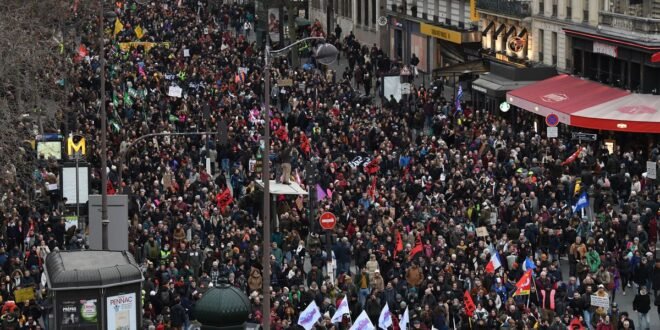
France is eight days away from its next nationwide day of strikes, and the movement is trying to get bigger. The December 1 walkout, called by eight public-sector unions, is now being extended to the private sector, with the CFDT, CGT and Unsa urging private employees to join public workers, young people and retirees on the streets.
The call, issued on Friday, November 20, accuses employers of delaying wage negotiations while prices keep rising. It sets up December 1 as the most significant test yet of the protest movement that has filled French streets on six consecutive Saturdays.
Who is striking, and what they want
The eight unions behind the public-sector call — CGT, FO, CFDT, UNSA, FSU, Solidaires, CFE-CGC and FA-FP — are demanding an immediate increase in the civil service index point, the base rate used to calculate the salaries of France's 5.8 million public employees. According to the unions, purchasing power for public workers has fallen 16% since 2017.
Their platform, as summarised by Brief News, includes higher pay, salary scales linked to inflation, improved career progression, proper funding for public services and social protection, and abolition of the one-day waiting period before sick pay. The unions warn that without unfreezing the index point, more than 600,000 of the lowest-paid public agents will remain at or just above the minimum wage.
Why the government's offer was rejected
The strike call followed a November 13 meeting at Matignon, the prime minister's office, where Sébastien Lecornu proposed a month of discussions on five issues, including urgent support for low-paid workers. Crucially, according to Brief News, he did not commit to raising the index point — and the unions left dissatisfied after the government again rejected general pay rises.
CGT leader Sophie Binet has urged the government to meet unions representing workers, young people and public employees and to make immediate announcements, saying only action on their demands would end the mobilisation.
One government concession is already in place: a 1.6% rise in the minimum wage takes effect on December 1, bringing the monthly minimum to about €1,502, according to Newzino. Unions say the increase is too small to change the picture for low-paid workers.
A movement that keeps building
December 1 will be the coalition's fourth joint public-sector mobilisation day since the school year began, following actions on September 29, November 5 and November 17. Turnout figures remain fiercely contested: for November 17, the Interior Ministry counted 146,000 demonstrators nationwide, while the CGT reported more than 500,000, according to AzerNews and Brief News.
Alongside the union days of action, the broader cost-of-living protest movement entered its sixth consecutive Saturday on November 21. The two currents — organised labour and the street movement — are now explicitly marching together, with union federations calling on private-sector staff to swell the December 1 crowds.
What happens next
The calendar after December 1 is already set. Another meeting between the government and the unions is scheduled for December 11, according to Brief News, and a wage committee has been set for December 15. The unions also want the government to spell out the funding, timetable and concrete measures for the 2027 budget.
That sequence gives December 1 a clear purpose: it is a show of force designed to strengthen the unions' hand before the December meetings. If the private sector answers the call in significant numbers — in transport, retail, logistics and industry — the pressure on Lecornu's government to move on the index point will grow sharply. If turnout disappoints, ministers may calculate that the movement is losing momentum. Either way, France's winter of discontent has a date, and it is a week away.
Also visit our other websites: GulfCareers — Jobs in Dubai, UAE & Gulf | IndeedOne — Jobs and Information