EuroDaily News and Guidance, Every Day

Related Articles


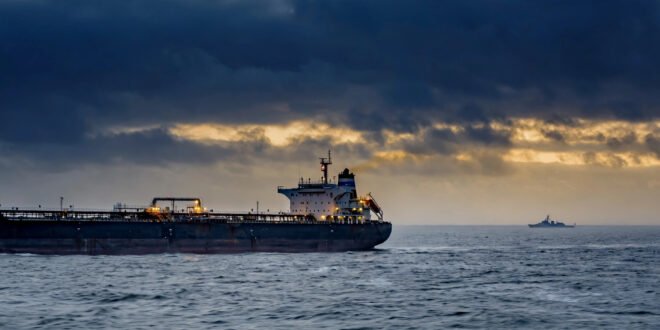
France and Britain will hold an international conference on 4 December 2026 on tackling Russia’s “shadow fleet” of oil tankers, France’s Foreign Minister Jean-Noël Barrot said on Monday, 16 November. The France UK Russian shadow fleet conference will be hosted in Paris, and it comes as European governments step up action against the ageing, often unregulated vessels that help Moscow keep its crude oil exports flowing despite Western sanctions.
The shadow fleet is one of the most important, and least visible, parts of the sanctions story. Since Russia invaded Ukraine, Western countries have imposed sanctions aimed at cutting Moscow’s oil revenue. In response, Russia has relied on a fleet of tankers, many of them old and operating outside normal regulatory and insurance systems, to carry its oil to buyers around the world. Stopping that fleet, or at least making it harder and more expensive to operate, has become a priority for France, Britain and their European partners.
This post explains what the shadow fleet is, why France and Britain are acting now, what happened in the Mediterranean last week, and what the December conference is expected to achieve.
France UK Russian Shadow Fleet Conference: What Was Announced
Barrot announced the conference at a monthly meeting of European Union foreign ministers in Brussels on Monday. According to Reuters, he told reporters: “I will host in Paris on December 4, at the request of the President of the Republic, an international conference dedicated to the fight against the Russian shadow fleet.” The reference to the President of the Republic means President Emmanuel Macron, who asked for the conference to be held.
The date, 4 December, gives governments just over two weeks to prepare. That is a short timetable for an international conference, which suggests the French government wants to move quickly and to build on recent action at sea. It also suggests the conference is intended to produce concrete steps, not only a statement of intent.
France and Britain are co-hosting the event, which reflects the close cooperation between the two countries on Ukraine and on sanctions enforcement. Both countries have been active in tracking and intercepting shadow fleet vessels, and both have an interest in the waters around Europe, where many of the tankers pass. The conference is expected to bring together other European governments, and possibly partners from beyond Europe, although the full list of participants has not yet been published.
What Is the Russian Shadow Fleet?
The term “shadow fleet” refers to a large number of oil tankers that carry Russian crude oil while operating outside the normal systems that govern international shipping. Many of the vessels are old, some are poorly maintained, and many sail under flags of convenience, with unclear ownership, limited insurance, and a history of changing names and flags to avoid detection.
Sanctions on Russia for invading Ukraine, aimed at cutting its oil revenue, have spawned this fleet, according to Reuters. The logic is straightforward: Russia needs to sell oil to fund its government and its war, and Western sanctions have made it harder to sell oil through normal channels. The shadow fleet is the workaround — a set of tankers that can carry Russian oil to buyers who are willing to take it, often at a discount, without going through the usual insurers, banks and shipping companies that would enforce the sanctions.
The fleet is also a safety and environmental risk. Ageing tankers with limited insurance and unclear ownership are more likely to be involved in accidents, and if one of them spills oil, it may be difficult to find who is responsible or to pay for the clean-up. European governments are concerned about that risk as well as about the sanctions issue, because many of the tankers pass through European waters, including the Mediterranean, the Baltic and the English Channel.
Why France and Britain Are Acting Now
The announcement of the December conference follows a series of recent actions against shadow fleet vessels. According to Reuters, EU naval forces last week boarded a suspected Russian shadow fleet crude tanker in the Mediterranean, and the EU’s foreign policy chief, Kaja Kallas, said on 15 November that the boarding had taken place. That operation is a sign that European governments are willing to take direct action at sea, not only to impose sanctions on paper.
Boarding a tanker is a significant step. It requires legal authority, naval capability, and political will, and it sends a message to the operators of the shadow fleet that their vessels are being watched and can be stopped. The December conference is likely to discuss how to make such operations more frequent and more effective, and how to share information about the vessels, their owners and their movements.
There is also a wider political context. The war in Ukraine continues, and Western governments are looking for ways to maintain pressure on Russia’s economy without escalating the conflict directly. Cutting oil revenue is one of the most powerful tools they have, because oil is Russia’s largest source of export income. If the shadow fleet can be disrupted, Russia’s ability to fund the war is reduced. That is why the conference matters, even though it is about shipping rather than about weapons or troops.
How the Shadow Fleet Operates
Understanding the shadow fleet helps to explain why it is hard to stop. The vessels often change their names, flags and owners, making it difficult to track them. They may turn off their automatic identification systems, which are the transponders that broadcast a ship’s position, so that they disappear from tracking systems. They may transfer oil from one ship to another at sea, a practice known as ship-to-ship transfer, which makes it harder to trace where the oil came from and where it is going.
Many of the vessels are insured by companies outside the Western insurance market, or are not insured at all in the normal sense. That matters because Western sanctions include a price cap on Russian oil, which is enforced in part through the insurance system: tankers carrying Russian oil above the cap price are supposed to be denied Western insurance and other services. The shadow fleet avoids that system by using non-Western insurers or by sailing without proper cover.
The fleet is also large. Estimates of its size vary, but it is generally described as numbering in the hundreds of vessels. That scale means that stopping one tanker, or even a handful, does not solve the problem. A coordinated effort, involving many governments sharing information and taking action together, is needed to have a real effect. That is the logic behind an international conference.
What the December Conference Could Achieve
The conference in Paris on 4 December is expected to focus on practical cooperation: sharing information about shadow fleet vessels, coordinating naval and coastguard action, tightening enforcement of sanctions, and working with the insurance and shipping industries to make it harder for the fleet to operate. It may also discuss the environmental and safety risks posed by the vessels, and how to respond if one of them is involved in an accident in European waters.
One question the conference will need to address is the legal basis for action at sea. Boarding a vessel in international waters is governed by international law, and governments need to be careful to act within it. The conference may discuss how to use existing legal powers more effectively, and whether new measures are needed.
Another question is how to involve countries beyond Europe. The shadow fleet carries oil to buyers around the world, including in Asia, and its vessels are flagged in many different countries. A European-only effort can make the fleet’s life harder in European waters, but a wider international effort would be more effective. The conference may be a step towards building that wider coalition, even if it starts with France, Britain and their European partners.
What to Watch After the Conference
After 4 December, the key test will be whether the conference produces concrete follow-up, or only a statement. Watch for announcements about joint operations, information-sharing agreements, new sanctions designations against specific vessels or companies, and any change in the number of boardings or detentions of shadow fleet tankers. Those are the signs that the conference has led to real action.
Also watch for Russia’s response. Moscow has an interest in keeping the shadow fleet operating, and it may adapt by changing routes, flags or ownership structures. The contest between sanctions enforcement and sanctions evasion is a continuing one, and the December conference is one move in it, not the end of it.
For now, the announcement itself is significant: France and Britain, at the request of President Macron, are putting the shadow fleet at the centre of the European agenda, and they are doing so just weeks after EU naval forces boarded a suspected shadow fleet tanker in the Mediterranean. The conference on 4 December will show how far they are prepared to go.
For more on the diplomacy around the war in Ukraine, see our report on the Ukraine-Russia talks in Abu Dhabi.
Sources: Reuters – France, UK to host December conference on Russian shadow fleet, Reuters – France temporarily bans firework mortars amid school protests, Reuters – French court of auditors warns on EDF reactor programme.
Also visit our other websites: GulfCareers — Jobs in Dubai, UAE & Gulf | IndeedOne — Jobs and Information