EuroDaily News and Guidance, Every Day
Related Articles



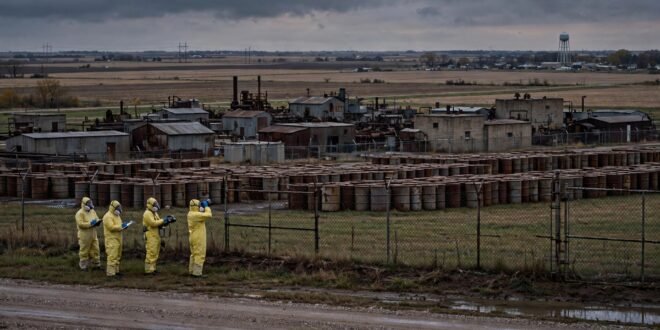
The Iowa lead azide detonation planned for this week in southeastern Iowa has become a national political fight, after President Donald Trump ordered the US Army on Monday to pause the operation until a federal appeals court and Iowa's incoming governor agree that it can go ahead. The Army wants to destroy 68 barrels holding nearly 9,500 pounds of degraded lead azide, an explosive chemical used in military munitions, which have been stored at the Iowa Army Ammunition Plant near Middletown for more than 20 years.
Why the Iowa Lead Azide Detonation Became Urgent
Army officials say the barrels are increasingly unstable and too dangerous to move or leave untended, and that a controlled detonation underground is the only viable option, with extensive mitigation measures in place. The plant, about eight miles from Burlington, has produced ammunition, mortars, mines and missile warheads since the Second World War. The stockpile originally came from the Lone Star Ammunition Plant in Texas.
The Environmental Protection Agency approved an emergency permit on 13 November and the Army publicly announced its plans on 15 November, initially setting the blast for 20 November. Public outcry from Iowa officials and environmentalists pushed the date back, amid warnings that a detonation could send a plume of toxic lead dust over farms, fields and towns, potentially travelling up to 100 miles depending on the weather.
Courts, Governors and a Moving Date
The Eighth Circuit Court of Appeals temporarily halted the detonation last week, freezing the Army's environmental permit while it reviews a lawsuit brought by environmental groups, including the Sierra Club's Iowa chapter and the Iowa Environmental Council, who argue the EPA failed to follow proper review procedures.
The Army responded that it could invoke emergency powers under a separate legal authority, and a Justice Department filing on 21 November said it intended to act on 24 November. A day later the Army moved the date again, to Wednesday 25 November, citing optimal weather conditions and the need to put all mitigation measures in place. Missouri Governor Mike Kehoe, whose state lies roughly 57 miles south of the plant, reassured Missouri residents on Monday that state agencies were preparing and monitoring the plan.
Trump's Condition and the Court's Response
In a Truth Social post on Monday 23 November, Trump said he believed destroying the material was the proper course, but had ordered the military not to proceed until the Eighth Circuit agreed the operation could go forward, and he made the decision fully subject to Governor-elect Rob Sand agreeing as well. If the court or Sand refused, he warned, the Army would not proceed and the incoming governor would bear responsibility for any death or destruction that followed.
Sand, a Democrat who takes office on 12 January 2027, replied that the administration should make the decision based on the information from the specialists it brought in months ago, and that the public deserved to know how Middletown reached this situation. Hours after Trump's post, the Eighth Circuit lifted its stay, apparently clearing the legal path. As of Monday evening there was still no word on whether the Army would proceed with the 25 November date.
Is There an Alternative to Blowing It Up?
A Georgia company, MuniRem Environmental, says chemical neutralisation could still be an option. Its chief executive, Valentine Nzengung, developed the technology partly from studying the hazards at the Iowa plant during his graduate research, and argues the decision should rest on scientific data, some of which is not yet clear. For now, the Iowa lead azide detonation remains a decision balanced between the risks of acting and the risks of leaving nearly five tons of unstable explosive in the ground.
Also visit our other websites: GulfCareers — Jobs in Dubai, UAE & Gulf | IndeedOne — Jobs and Information