EuroDaily News and Guidance, Every Day
Related Articles



The Macron golden rule is back on the table. President Emmanuel Macron confirmed on Monday that he is considering writing a binding fiscal rule into the French constitution, reviving a reform first approved by both houses of parliament in 2011 but never put into force. With public debt approaching 120 per cent of GDP and the 2027 budget battle still unresolved in parliament, the idea — dormant for fifteen years — has suddenly become the centre of France's fiscal debate.
What the Macron Golden Rule Would Do
The proposal would create framework laws on balanced public finances, setting a path of at least three years for the public accounts. Each framework would fix a maximum level of spending and a minimum level of revenue for every year it covers, and ordinary budget laws and social security financing laws would be required to respect those limits. A budget that broke the frame could be struck down by the Constitutional Council, giving the Macron golden rule an enforcement power that ordinary legislation lacks.
The blueprint is not new. In 2011, under President Nicolas Sarkozy, parliament approved a constitutional draft built on the same architecture, but it was never promulgated and never took effect. Macron's plan would dust off that text rather than start again, which is one reason it could move quickly: the legal drafting exists, and the political argument — that France needs a credible, binding path back to balanced finances — is one the Élysée believes investors are ready to hear.
The Debt Numbers Behind the Push
France's public debt has reached about €3,600 billion, close to 119 per cent of GDP, and the deficit remains above 5 per cent of output. The cost of servicing that debt is climbing fast: Finance Minister Roland Lescure has pointed out that interest payments alone are set to pass €91 billion in 2027, roughly €20 billion more than this year. Bond investors are watching the spread between French and German government borrowing costs for any sign that confidence is slipping.
Macron has explicitly tied the timing to the markets. He told Le Figaro that if volatility is still there by January, "thinking about a golden rule like the 2011 one may be an idea to explore." Lescure argues the rule's advantage is that it lets a government set a medium-term timetable for the public finances instead of lurching from one annual budget fight to the next — a pointed comment in a month when the 2027 finance bill was flatly rejected by the National Assembly and is being rebuilt in the Senate.
A Three-Fifths Hurdle at Versailles
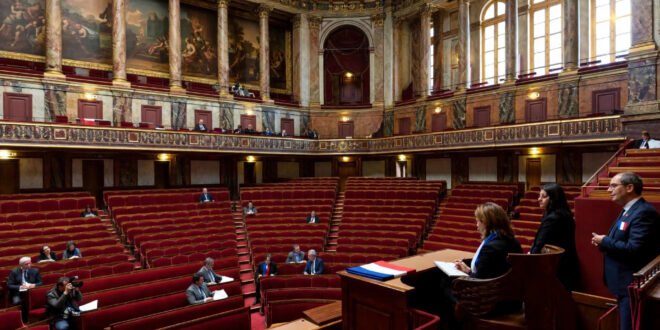
Constitutional change in France requires a Congress of parliament — deputies and senators sitting together at Versailles — and a majority of three-fifths of the votes cast. That threshold looks demanding but not impossible: the Macron golden rule has drawn rare, conditional backing from parties of the right, and a combination of the centre, the right and the far right could carry it over the line while the left opposes it.
Prime Minister Sébastien Lecornu has begun sounding out the political parties on what is practicable, and the presidency says any decision to convene Congress will wait until the current budget battle is settled. A vote could come as early as January. Whether the golden rule becomes France's fiscal straitjacket or joins the long list of announced reforms that never landed will depend on those consultations — and on whether the markets stay calm enough, or restless enough, to make the case for Macron.
Also visit our other websites: GulfCareers — Jobs in Dubai, UAE & Gulf | IndeedOne — Jobs and Information