EuroDaily News and Guidance, Every Day


Related Articles
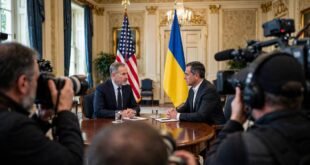
Mamdani disbands NYPD Strategic Response Group — that is the headline from New York City on Monday, 16 November 2026, when Mayor Zohran Mamdani announced that he is disbanding the New York Police Department's Strategic Response Group, known as the SRG. The announcement was made alongside NYPD Commissioner Jessica Tisch, and it fulfils a key campaign promise made by Mamdani during his campaign for mayor. The decision ends one of the most controversial units in American policing, a unit created as a counterterrorism force that became best known for its tactics at street protests, and it replaces that unit with a new set of arrangements that separate counterterrorism work from protest response.
The announcement, reported on Monday by Reuters, CNN and USA TODAY, sets out a detailed plan, and this article sets out what was announced, what the Strategic Response Group was, why it became controversial, what will replace it, and how civil rights groups have responded. Every claim in this article is drawn from the reporting linked below, and no additional facts have been added.
What Mamdani announced on Monday
On Monday, 16 November 2026, New York City Mayor Zohran Mamdani announced that he is disbanding the NYPD's Strategic Response Group, according to Reuters, CNN and USA TODAY. The announcement was made alongside NYPD Commissioner Jessica Tisch, whose presence at the announcement underlined that the decision was presented as a joint step by the mayor and the police commissioner. The move fulfils a key campaign promise, according to the reporting, and it was one of the commitments Mamdani made to voters during his campaign for mayor.
Mamdani set out the decision in his own words. According to the reporting, he said: "During our campaign, I promised New Yorkers that we would disband the Strategic Response Group and separate counterterrorism from protest response, and today we are delivering on that promise." The quote captures the two parts of the announcement: the disbanding of the unit itself, and the separation of counterterrorism work from protest response, so that the two functions are no longer carried out by the same unit.
What the Strategic Response Group was
The Strategic Response Group, known as the SRG, was created in 2015 as a counterterrorism unit, according to Reuters, CNN and USA TODAY. Its original purpose was counterterrorism, and it was established as a specialist unit within the New York Police Department. That origin is an important part of the story, because the reforms announced on Monday are built around the idea of returning counterterrorism to a counterterrorism bureau and taking protest response out of the hands of a counterterrorism unit.
Over time, the SRG became controversial for its tactics at street protests, according to the reporting. Those tactics included pepper spray by armed officers in riot gear and mass arrests, and the unit faced particular scrutiny during the 2020 Black Lives Matter demonstrations. The reporting describes a unit whose public reputation came to be defined less by its counterterrorism origins and more by its conduct at protests, where its methods drew sustained criticism from protesters, journalists, legal observers and civil rights groups.
The 2023 settlement and the case against the unit
The controversy around the SRG reached a formal legal conclusion in 2023, when the unit was rebuked in a legal settlement. According to the reporting, the settlement followed a lawsuit brought by New York Attorney General Letitia James, the New York Civil Liberties Union, known as the NYCLU, and others over excessive force against protesters, journalists and legal observers in the summer of 2020. The case concerned the policing of protests during that summer, and the settlement was a rebuke of the SRG's conduct.
The 2023 settlement is the most concrete legal marker in the history of the unit. It followed the scrutiny that the SRG faced during the 2020 Black Lives Matter demonstrations, and it recorded, in the form of a settlement, that the unit's tactics had been challenged in court by the state's most senior law officer and by one of the country's leading civil liberties organisations. The reporting presents the settlement as a central reason why the unit became a campaign issue, and why its disbanding was presented by Mamdani as the fulfilment of a promise.
Where counterterrorism goes now
Under the plan announced on Monday, the SRG's counterterrorism functions will move to the NYPD's Intelligence and Counterterrorism Bureau. That is the first of the two main changes: the counterterrorism work that the SRG was created to do in 2015 will continue, but it will be carried out by the bureau whose name describes that work, rather than by a unit that also handled protests.
The new civilian-led protest response
The second main change is the creation of a new civilian-led Community Dialogue and De-escalation Division in the Mayor's Office of Community Safety, which will handle protest response. According to the reporting, the division will be civilian-led, and its members will be unarmed and will have no arrest powers. That is a deliberate contrast with the SRG, whose officers were armed and who carried out mass arrests at protests.
The division's name describes its intended approach: community dialogue and de-escalation, rather than the tactics that made the SRG controversial. Its members, being unarmed and without arrest powers, will not be able to use the methods that drew criticism, including pepper spray by armed officers in riot gear and mass arrests. The division sits in the Mayor's Office of Community Safety, which places it outside the police department and under civilian leadership.
The NYPD will also create two new police bodies as part of the plan. The first is a First Amendment Support Team of 30 uniformed officers trained in communication and de-escalation. The second is a Patrol Support Division, staffed by vetted officers. The reporting describes the First Amendment Support Team as a small, specialist team of 30 officers, and it describes the Patrol Support Division as a division staffed by vetted officers, without giving a figure for its size. The reporting does not set out further detail about the training, deployment or command of either body, and those details have not been reported.
What is now banned at protests
The reforms formally ban kettling, tear gas and long guns during protests, according to the reporting. Kettling is the practice of surrounding protesters and confining them in a small area, tear gas is a chemical irritant used for crowd control, and long guns are the rifles carried by armed officers. The formal ban on all three during protests is one of the clearest and most specific parts of the announcement, and it applies to protest policing as a whole, not only to the disbanded unit.
USA TODAY also reports a ban on pepper spray at protests, which adds a fourth prohibition to the list. Pepper spray was one of the tactics cited in the reporting about the SRG's conduct at street protests, where armed officers in riot gear used it, and a ban on its use at protests would remove one of the methods most closely associated with the unit. Readers should note the attribution here: the bans on kettling, tear gas and long guns are reported across the coverage, while the pepper spray ban is reported by USA TODAY.
How civil rights groups responded
The NYCLU and other civil rights groups cautiously welcomed the move, according to the reporting, while warning that the new Patrol Support Division must not become a rebranding of the SRG. That response is best understood as two parts: a welcome for the disbanding itself, and a warning about what comes next.
The warning is equally significant. The groups warned that the new Patrol Support Division must not become a rebranding of the SRG, which is to say that it must not simply carry on the same tactics under a new name. That warning places the focus on implementation: the test of the reforms, in the view of the groups quoted in the reporting, will be whether the new division behaves differently from the unit it replaces. The reporting does not record a more detailed response from the groups, and it does not quote a fuller statement, so the cautious welcome and the warning are the full extent of the reaction reported.
What happens to the officers, the funding and the law
About 500 officers currently assigned to the SRG will be transferred to other positions before next spring, according to the reporting. That timetable, before next spring, is the only date given in the reporting for the implementation of the changes, and it means that the transfer of the officers will take place over the coming months rather than overnight. The reporting does not say where the officers will be transferred to, and it does not set out a more detailed timetable.
The changes need no additional funding and no change to the size of the NYPD workforce, according to the reporting. That is a notable detail, because it means the reforms are presented as a reorganisation of existing resources rather than an expansion. No new money is required, and the overall size of the police workforce does not change. The officers move, the functions move, and the new civilian-led division is created, all within the existing funding and staffing.
Mamdani also endorsed the CURB Act, a legislative proposal by City Council member Chi Ossé, according to the reporting. The reporting does not set out the contents of the CURB Act, and this article does not describe them, because they have not been reported in the sources used here. What the reporting establishes is the endorsement itself, and the name of the council member who proposed the legislation.
Finally, Mamdani did not hold a news conference or take questions on Monday, according to the reporting. That fact is worth repeating at the end of this article, because it means that the plan described here is the plan as announced and as reported, without the further detail that a news conference might have provided. The reforms are being implemented, and their outcome is still pending, so the full picture of how the new arrangements work in practice will only emerge as they take effect.
What happens next
What happens next is implementation. The SRG is to be disbanded, its counterterrorism functions are to move to the NYPD's Intelligence and Counterterrorism Bureau, and a new civilian-led Community Dialogue and De-escalation Division is to handle protest response, with its members unarmed and without arrest powers. The NYPD will also create a First Amendment Support Team of 30 uniformed officers trained in communication and de-escalation, and a Patrol Support Division staffed by vetted officers. The reforms formally ban kettling, tear gas and long guns during protests, and USA TODAY also reports a ban on pepper spray at protests.
That is the position as announced on Monday, 16 November 2026. The decision fulfils a key campaign promise, in Mamdani's own words: "During our campaign, I promised New Yorkers that we would disband the Strategic Response Group and separate counterterrorism from protest response, and today we are delivering on that promise." Whether the new arrangements work as intended, and whether the warning from civil rights groups proves justified, are questions that will only be answered as the reforms are put into practice. For now, the fact that can be reported with certainty is that Mamdani disbands NYPD Strategic Response Group, and that New York City's approach to policing protests has been formally changed.
Sources
This article is based on reporting by Reuters, CNN and USA TODAY, published on Monday, 16 November 2026. Readers can read the original reporting here: Reuters, CNN and USA TODAY.
Also visit our other websites: GulfCareers — Jobs in Dubai, UAE & Gulf | IndeedOne — Jobs and Information