 EuroDaily News and Guidance, Every Day

Related Articles



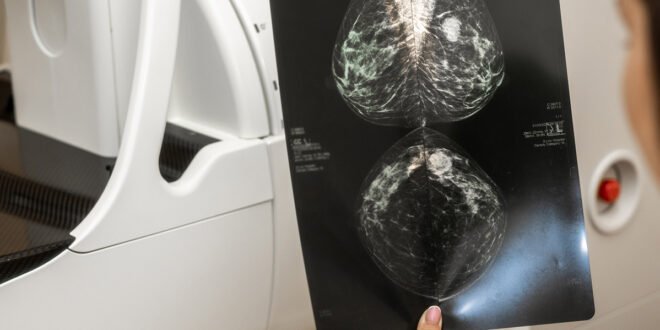
The NHS has begun inviting women to take part in the world's largest trial of artificial intelligence in breast cancer screening, in a study that could change how mammograms are read across the country.
The NHS AI breast screening trial, known as EDITH — Early Detection using Information Technology in Health — is expected to involve nearly 700,000 women over the next three years. Recruitment has started at Cambridge University Hospitals, and the trial will expand to 30 screening sites across the UK in the coming months, NHS England said.
One Human Reader, Replaced by AI
At present, every mammogram in the NHS screening programme is checked by two specialists. Under the trial, one of those two human readers will be replaced by AI software, to test whether a specialist working alongside the technology can match — or improve on — the current system.
Four different AI systems are being tested, in more than one way of working: in one part of the study the AI grades images before specialists see them, and in another it checks the images afterwards, according to BBC reporting. Women aged 50 to 71 are invited for routine screening every three years, and more than two million attend each year, so even a modest improvement in accuracy or speed would affect a huge number of people.
The trial is led by the University of Warwick, the University of Cambridge and Cambridge University Hospitals NHS Foundation Trust, in collaboration with NHS England, and is backed by £11 million of government funding through the National Institute for Health and Care Research (NIHR).
Catching Cancers Earlier, Freeing Up Specialists
The hope is twofold. AI may help identify cancers that are too small to see or feel at an earlier stage, when treatment is most effective. And if software can safely do part of the reading work, scarce specialists could spend more time with patients and help cut the long waiting lists that have built up in diagnostic services.
Professor Sian Taylor-Phillips of the University of Warwick, who co-leads the trial, said all four AI systems had been rigorously tested for accuracy, and that every clinical decision would remain with NHS staff. She has also stressed that the aim is to improve detection without overdiagnosing milder disease, which can lead to women being recalled for tests they do not need.
Professor Lucy Chappell, chief scientific adviser at the Department of Health and Social Care and chief executive of the NIHR, called it a "landmark trial" that could deliver "faster, more accurate diagnoses when it matters most."
Three Years Before the Verdict
The study will run for around three years, so the results will not be quick. Women who are invited will be told about the trial in their screening invitation and can choose not to take part.
The trial is also supported by a new research platform, AIR-SP, built by NHS England with nearly £6 million of government money to make it easier for hospitals to join AI screening studies. Its launch was announced on the same day as a call for evidence to inform a new National Cancer Plan.
If EDITH shows that one specialist plus AI is as safe as two specialists, the NHS would have evidence to redesign one of its biggest screening programmes. If it does not, the trial will still have answered the question at a scale no other health system has attempted.
Also visit our other websites: GulfCareers — Jobs in Dubai, UAE & Gulf | IndeedOne — Jobs and Information
