EuroDaily News and Guidance, Every Day

Related Articles

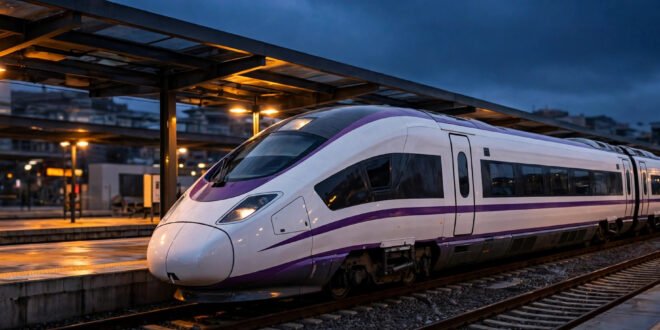
Spain’s government has replaced the heads of both parts of the country’s railway system, naming technical officials to run the train operator Renfe and the infrastructure manager Adif after the deadly train crash near Urda and a wave of rail strikes. The Renfe Adif new presidents are Inmaculada Gutiérrez, who will lead Renfe, and Joaquim Hortalà, who will take charge of Adif, and both appointments were approved by an extraordinary Council of Ministers on Friday 13 November 2026.
The changes were made by Carlos Cuerpo, the first deputy prime minister and Economy Minister, who took over the Transport Ministry on a temporary basis after Óscar Puente resigned over the Urda crash. Cuerpo has chosen two presidents with technical profiles, in a deliberate break from the political appointments of the past, and the government presents the change as a response to the discontent in the rail sector. The opposition reads it as a dismissal that came too late.
The appointments come after a month of crisis for Spain’s railways. The high-speed train collision near Urda in Toledo province on 28 October killed 69 people, Puente resigned on 3 November, the president of Adif resigned days later, and train drivers went on strike on 10 November. A further rail strike is planned for Tuesday 17 November, and the new presidents take over with that strike still in place.
Who the New Presidents Are
Inmaculada Gutiérrez Carrizo, the new president of Renfe, is an economist and senior civil servant. She holds a degree in Economics and Business Studies from the Complutense University of Madrid and belongs to the Senior Corps of State Commercial Technicians and Economists, the same corps as Cuerpo himself. She comes to the post from the general management of Renfe Proyectos Internacional, the operator’s international projects arm, so she is, in the words of El País, “a person from the house”.
Gutiérrez will be the second woman to lead the public railway company, after Mercè Sala, who held the post between 1991 and 1996. Her appointment is presented as a choice of competence over politics: a senior official with experience of the company and of its international work, rather than a political figure from outside the sector.
Joaquim Hortalà i Vallvé, the new president of Adif, brings experience in the railway sector and its regulatory framework. He joined the State Lawyers Corps in Barcelona in 2004, and he was secretary general of Renfe Operadora until June 2026, when he left the post amid disagreements with the team of the then president. His path to Adif runs through the CNMC, Spain’s markets and competition regulator, and through Renfe itself, so he knows both the operator and the infrastructure manager from the inside.
Why the Changes Were Made
The immediate trigger was the Urda crash. Two high-speed trains collided in Toledo province on 28 October, killing 69 people, and the disaster redrew the battle lines of the snap election campaign, turning rail investment into the central charge against Pedro Sánchez’s government. Puente announced his resignation in Congress on 3 November, six days after the crash, and Sánchez decided not to name a new minister before the 29 November election, leaving Cuerpo to run the ministry in the meantime.
The leadership changes followed in quick succession. Luis Pedro Marco de la Peña, the president of Adif, presented his resignation to Cuerpo on 4 November, during his first meeting with the acting minister, after little more than a year in the post. The Renfe president, Álvaro Fernández Heredia, was dismissed by the Council of Ministers on 13 November, after less than two years in the job. He had been appointed by Puente in January 2025, when Puente was secretary general for Sustainable Mobility, and he was regarded as close to the former minister.
El País reported that Fernández Heredia’s exit came after the strong impact of the train drivers’ strike on Tuesday 10 November, when the SEMAF union held a full-day stoppage across the Renfe group. The strike, and the partial stoppages that followed, showed that the crisis was not only about the crash but about confidence in the way the railway was run, and the government’s answer was to change the people running it.
The Outgoing President's Farewell Letter
Fernández Heredia responded to his dismissal with a letter to Renfe employees in which he assumed “fully and in the first person the responsibility for not having known how to avoid the current situation”, while defending the work of the company during his time in charge. The letter, reported by Infobae, is an unusually frank admission from a dismissed public official, and it shows how seriously the crisis is felt inside the railway.
Cuerpo thanked Fernández Heredia for his work during his mandate, according to AS, but the thanks did not soften the message of the change. The government has replaced a president regarded as a political appointment with a senior official from inside the company, and it has done the same at Adif, where Hortalà replaces a president who had himself resigned only days earlier.
The farewell letter also underlines the human cost of the crisis. The Urda crash killed 69 people, and it followed another fatal crash near Adamuz in January, which killed 46 people and whose investigation is still open. The two disasters, in the same year, have put the safety of Spain’s high-speed network at the centre of public debate in a way no previous incident had.
The Strike That Has Not Been Called Off
The appointments have not stopped the industrial action. Railway workers remain called to a strike on Tuesday 17 November in defence of safety in the sector, according to EFE, preceded on Monday by a new demonstration, while the government approves and implements the safety measures agreed with the unions that are still pending. The strike is promoted by the general works councils of Renfe and Adif and by SEMAF, the train drivers’ union.
The unions are waiting for concrete measures, not only for new faces. Cuerpo began a series of meetings with the main unions, UGT, CCOO and SEMAF, after taking over Transport, and the government has shown willingness to negotiate, but the unions say they want concrete safety measures rather than promises. The strike on 10 November, and the partial stoppages on 12 November, were called over safety, and the dispute will not end until the agreed package of actions is actually in place.
The new presidents therefore take over in the middle of a live dispute. Their technical profiles may help them in talks with the unions, who have demanded competence and safety rather than political management, but they will be judged on whether trains run safely and on time, not on their CVs.
What the Changes Mean for Spain's Railways
The appointments complete the renewal of the leadership of Spain’s public railway sector after the resignations of the minister and the Adif president and the dismissal of the Renfe president. The government’s choice of two technical officials, both with experience inside the railway system and the state administration, is a signal that it wants the crisis managed by people who understand the network rather than by politicians.
Whether that signal is enough will depend on the investigation into the Urda crash, on the safety measures the government has promised, and on the outcome of the election on 29 November. Sánchez will not name a new Transport Minister before the vote, so Cuerpo will continue to run the ministry, and the new presidents will answer to him rather than to a minister of their own.
For passengers, the immediate question is simpler: will the trains run, and will they be safe? The strike on 17 November will be the first test of the new leadership, and the safety measures agreed with the unions will be the second. Until both are passed, the crisis that began at Urda on 28 October is not over, whatever names are on the doors at Renfe and Adif.
For context on another transport disruption, see our report on the FAA ground stop and flight recovery.
Sources: El País, AS, Infobae.
Also visit our other websites: GulfCareers — Jobs in Dubai, UAE & Gulf | IndeedOne — Jobs and Information