EuroDaily News and Guidance, Every Day
Related Articles



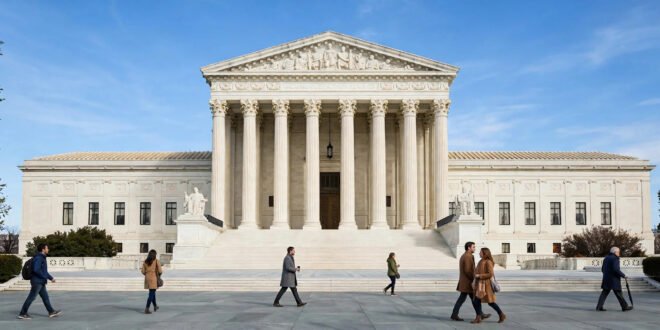
The Supreme Court agreed on Friday, November 13, to decide whether President Donald Trump can suspend access to asylum at the US-Mexico border. The Supreme Court asylum proclamation case, Mullin v. Refugee and Immigrant Center for Education and Legal Services, No. 26-239, will test the legality of the proclamation Trump signed on his first day back in office.
The Court granted the government’s petition for review, but limited the grant to the first two of the three questions the government asked. It declined to review the third question, which concerned whether the class of migrants covered by the lower court’s ruling was properly certified. The order gives no reasons, so the omission should not be read as a ruling on the class.
Supreme Court Asylum Proclamation Case: What the Justices Will Decide
The first question is whether Proclamation 10888, “Guaranteeing the States Protection Against Invasion,” and the Homeland Security guidance carrying it out, are lawful. Signed on January 20, 2025, the proclamation declared that “an invasion is ongoing at the southern border” and suspended the entry of noncitizens engaged in it, cutting off their access to asylum and other protections that would let them remain. It relied on Sections 212(f) and 215(a) of the Immigration and Nationality Act.
The second question is whether federal law — 8 U.S.C. 1252(f)(1) — bars the classwide relief the district court entered, which covered everyone affected by the ban rather than only the people who sued.
How the Case Got Here
Immigrant rights groups, including RAICES (Refugee and Immigrant Center for Education and Legal Services), Las Americas Immigrant Advocacy Center and the Florence Immigrant and Refugee Rights Project, sued immediately, backed by the American Civil Liberties Union and other legal organisations. A federal district court in Washington, D.C., and then the US Court of Appeals for the D.C. Circuit, ruled in the plaintiffs’ favour, finding the proclamation unlawful.
The D.C. Circuit issued its ruling on April 24, 2026, and denied rehearing on July 23, 2026. The court has held its mandate while the government sought Supreme Court review. The government’s petition was filed on August 24 by Solicitor General D. John Sauer, distributed for the November 6 conference, and carried over to the November 13 conference before the grant.
What Happens Next — and What Does Not Change
The grant does not change anything on the ground today. The asylum-related parts of the lower-court judgment have been on hold since August 2025, and the D.C. Circuit agreed to keep its own ruling on hold while the government appealed, so the restrictions remain in force while the justices consider the case.
Arguments are expected in spring 2027, according to SCOTUSblog and the ACLU, with some reports pointing to March 2027. A decision is expected by the end of the term in late June 2027. No date has been set.
Agreeing to hear the case is not a ruling on the merits. The justices have not decided whether the proclamation is lawful, and the November 13 order is not a new asylum eligibility rule, an approval of the proclamation, or a grant of asylum to any individual applicant.
For background on the administration’s wider immigration approach, see our report on Trump saying deportations have been too tough.
Sources: American Civil Liberties Union, Immigration Analytics, Law Commentary (SCOTUSblog and Reuters reporting).
Also visit our other websites: GulfCareers — Jobs in Dubai, UAE & Gulf | IndeedOne — Jobs and Information