EuroDaily News and Guidance, Every Day

Related Articles



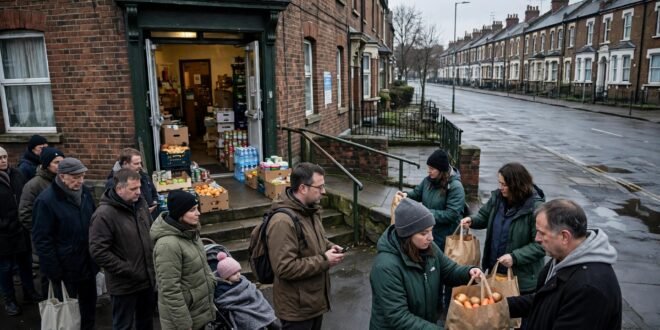
UK destitution has become entrenched, according to the Joseph Rowntree Foundation's latest study, published on Tuesday. Around 1.8 million households experienced destitution in the UK at some point over the course of 2025, containing approximately 3.8 million people, of whom just under one million were children. Destitution is the most severe form of poverty, defined in the study as being unable to afford the essentials people need to eat, stay warm and dry, and keep clean.
The report, Destitution in the UK 2026, is the fifth in the foundation's series. It concludes that the elevated levels of destitution first seen across the UK in 2022 have remained extraordinarily high, rather than falling back as the cost of living crisis eased.
What the UK Destitution Figures Show
The number of destitute adults has remained broadly unchanged since 2022. There has been a modest fall in the number of children living in destitute households, down 7% since 2022, but there were still more than two and a half times as many children affected by destitution in 2025 as there were in 2017.
The research was funded by the Joseph Rowntree Foundation and carried out by Heriot-Watt University with the research firm Verian. It draws on case studies in 18 locations across the UK, including a survey of 4,884 users of 120 crisis support services conducted between October and December 2025, and in-depth interviews with 31 people who were migrants to the UK.
Geography matters. The study suggests Greater London has the highest rate of extreme hardship, with around 2% of households experiencing destitution when the figures were gathered in census week. Glasgow was ranked among the 30 local authority areas with the highest rates of destitution in the UK, the highest in Scotland. The proportion of migrants among people experiencing destitution has continued to rise, from 25% in 2019 to 32% in 2025.
Benefits Too Low to Cover the Essentials
At the heart of the issue, the foundation argues, lies the inadequacy of Universal Credit standard allowances, particularly for single people, which remain below the very low-income level built into the study's own definition of destitution. In other words, the basic rate of Britain's main working-age benefit is set lower than the income line the researchers use to define the deepest poverty.
The study measures destitution in two ways, developed in consultation with members of the public: people who have gone without two or more of the essentials in the past month because they could not afford them, and people whose income is so low that they cannot reasonably be expected to meet those needs. Going without includes lacking adequate food, heating, lighting, weather-proof clothing and footwear, basic toiletries, or a place to live that is safe and dry.
The series has tracked the problem since 2017, when the number of people affected was far lower. By 2022 the total had grown by almost two and a half times, driven by the pandemic years and the cost of living crisis. Campaigners had hoped the fall in inflation since then would pull the numbers down. Instead, the 2026 report finds the elevated level has become the new normal, with crisis services in the 18 study areas reporting the same intense demand they saw at the peak.
The government points to a different set of numbers. Ministers say household incomes have risen 5% in real terms, that food bank usage has fallen, and that the decision to remove the two-child limit on benefits will lift 450,000 children out of poverty by the end of this parliament.
The two pictures are not easy to reconcile, and the foundation's conclusion is blunt: high levels of UK destitution are no longer a temporary spike from the pandemic and inflation years. They have become a settled feature of the system, and the report argues that without higher basic allowances and better crisis support, millions will continue to go without the essentials that most people take for granted.
Also visit our other websites: GulfCareers — Jobs in Dubai, UAE & Gulf | IndeedOne — Jobs and Information