EuroDaily News and Guidance, Every Day
Related Articles



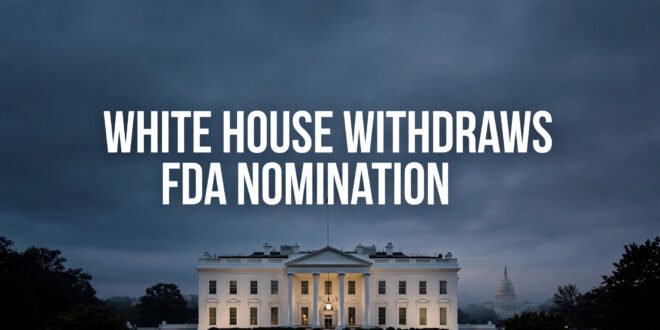
White House withdraws Heidi Overton FDA nomination late on Tuesday, November 17, pulling the nomination of Dr Heidi Overton to lead the Food and Drug Administration just one day before the Senate health committee was due to vote on whether to advance her to the full Senate. A White House official confirmed the decision to USA Today on November 17, and the news was first reported by Axios on Tuesday evening. The withdrawal ends Overton's bid to run the agency that regulates the nation's food supply, medicines and medical devices, after weeks in which Republican support for her steadily slipped away.
The decision was abrupt, and it caught even the committee chairman by surprise. Senator Bill Cassidy, the Louisiana Republican who chairs the Senate Health, Education, Labor and Pensions (HELP) Committee, had spent Tuesday in what he described as productive conversations with members, and he believed Overton still had the votes. The White House disagreed. As one senior administration official told Axios, Overton "lacks the support on the Hill to move forward with her confirmation". The result is that the FDA, already without a permanent commissioner since May, will now go without one well into next year.
The withdrawal, hour by hour
The decision came late on Tuesday, November 17, the night before the HELP Committee was scheduled to vote. CNN reported that the White House abruptly pulled its nominee amid what Trump officials saw as scepticism from multiple Senate Republicans, citing a White House official and two other people familiar with the matter. USA Today reported that a White House official confirmed the withdrawal to the newspaper on November 17, a day before the committee vote. Axios was first to report the decision, according to both USA Today and Fierce Pharma, which noted that the news broke on Tuesday evening.
The White House did not immediately comment on its decision to pull Overton's nomination, or give a timeline for picking a new nominee, CNN reported. A White House spokesperson and Overton did not immediately respond to requests for comment, according to The Straits Times.
Overton herself is a senior White House aide: deputy director of the White House Domestic Policy Council, and a physician with an M.D. and a Ph.D. President Donald Trump nominated her on August 19 to replace Marty Makary, who resigned as FDA commissioner in May, Medical Economics reported. She had spent most of her professional career working directly for Trump or for conservative groups aligned with his agenda, according to The Guardian, which was told of the withdrawal by a White House official. Her nomination in August was seen as a move to bring a stabilising Trump loyalist to the agency after a tumultuous year under Makary.
The vote that never happened
The Senate Health, Education, Labor and Pensions Committee had been scheduled to vote on Wednesday, November 18, on whether to recommend Overton for a full floor vote. The committee had set the vote for 10 a.m. on Wednesday, according to Focal News, and the hearing to consider her nomination had already taken place in September. By Tuesday, the question was no longer whether the vote would happen but whether Overton could survive it — and the White House decided not to find out.
With Democrats expected to oppose her nomination, Overton needed unanimous Republican support on the committee to advance to the full Senate, USA Today reported. Republicans hold a one-vote majority on the panel, so a single Republican defection would have sunk the nomination if every Democrat voted no, according to The Hill, as reported by Medical Economics. To win confirmation, Overton would have needed the votes of all 12 Republicans on the committee, while Democrats hold 11 seats, the Economic Times reported. The maths left no room for doubt: even one holdout was fatal.
And holdouts were visible. Senators Susan Collins of Maine and Lisa Murkowski of Alaska had not said how they would vote, CBS News reported hours before the withdrawal, according to Medical Economics. Several Republicans on the committee would not say on Tuesday how they planned to vote, including Murkowski and Senator Josh Hawley of Missouri, according to The Washington Sun. The committee chairman himself, Cassidy, said earlier on Tuesday that he remained undecided about Overton ahead of the vote, the Economic Times reported. The White House read that uncertainty and acted before the vote could make it official.
Why Republican support collapsed
Overton faced bipartisan questions in the Senate about her willingness to break from Trump, particularly on his unsupported claims about the dangers of childhood vaccines, the Economic Times reported. Cassidy, a doctor himself, had previously called Overton's support for Trump's plan to break up combination vaccines — including the measles, mumps and rubella shot — into question, and he criticised her for helping craft the president's executive order proposing an overhaul of childhood vaccinations, The Straits Times reported. Medical Economics reported that Cassidy emphasised leadership capability and vaccine policy, criticising support for breaking up combination vaccines and pressing on independence from presidential pressure.
Abortion policy was the other fault line. Overton is a prominent abortion opponent, The Guardian reported, and the FDA is the agency that regulates medication abortion. In a 2023 policy brief for the conservative America First Policy Institute, Overton said Congress should strictly regulate the abortion pill mifepristone "to protect women and children", criticised federal policies that allow for the mailing of abortion pills, and wrote that abortion "is corrosive to children, women, and society broadly", according to The Guardian's reporting. Mifepristone oversight became a focal point of her confirmation process, Medical Economics reported, including proposed in-person ultrasound requirements, adverse-event reporting expectations, and questions about consistency with the administration's litigation positions.
The politics cut both ways, and that was the problem. Anti-abortion activists pressed for commitments on mifepristone, while moderate Republicans worried about her independence and her vaccine positions. Fierce Pharma reported that her September hearing before the HELP Committee was marked by tightrope-walking on vaccines, abortions, flavoured vapes and whether President Donald Trump is capable of being wrong. Overton conceded multiple times during the hearing that vaccines approved by the FDA, as well as mifepristone, are safe and effective, Fierce Pharma reported — but she stopped short of admitting that Trump has been wrong when dispensing medical information out of line with what scientific evidence shows. CNN also reported an "icy" relationship between Overton and Health Secretary Robert F. Kennedy Jr., and The Straits Times reported that she was the target of criticism from Calley Means, who recently left his job as one of Kennedy's top advisers.
Cassidy's pushback: "a viable confirmation path"
The most striking reaction came from the committee chairman himself. Shortly after the nomination was pulled, Cassidy wrote on X: "Tonight, the White House abandoned a viable confirmation path for Dr. Overton. This was odd as I was having productive conversations with members. I believe she would have had the votes to pass out of committee and pass the full Senate." CNN quoted the post in full, and reported that the committee's chair had maintained on Tuesday night that she was on the verge of garnering enough support. The White House did not immediately comment on Cassidy's contention, CNN said.
Cassidy went further, arguing that the withdrawal was not really about votes at all. The White House said the decision was because she did not have the votes to pass, Cassidy posted, adding: "The Administration withdrew Dr. Overton rather than make such commitments," according to The Washington Sun — a reference to assurances around her nomination that anti-abortion Republicans had sought.
Who could replace her
Attention has already turned to who might be nominated next. Outgoing Kansas Senator Roger Marshall, who lost his re-election bid this month, has expressed interest to the administration in being picked for the FDA role, according to one person familiar with private discussions, CNN reported. Marshall is a member of the Senate's health committee and benefits from close relationships on the panel, CNN noted. Semafor reported on November 17 that Republicans were discussing Marshall as a potential replacement, with four people familiar with the discussions saying Republicans view him as a stronger potential nominee than Overton, according to Fierce Pharma.
The argument for Marshall is straightforward: senators have an easier time getting confirmed, traditionally, and a sitting senator on the very committee that votes on the nomination starts with relationships his predecessor lacked. Semafor reported that Marshall is seen as a potentially stronger candidate because Overton faced resistance from both anti-abortion activists and moderate Republicans. The administration has not made a final decision about a replacement, and the White House did not immediately comment on the discussions, while Marshall's office declined to comment, according to reporting on the Semafor story.
There is also a clock running. Medical Economics reported that Senate Republicans are racing to confirm nominees before Democrats take control in January, and CNN reported that the move is now likely to leave the FDA without a permanent leader well into next year. One person familiar with the matter told CNN that, with the limited time left, confirming a permanent FDA commissioner will fall to Senate Democrats. That would mean the next commissioner — whoever it is — would need Democratic votes, a very different political calculation from the one that has just failed.
An agency run by an acting chief
In the meantime, the FDA is being led on an acting basis by attorney Kyle Diamantas, who previously headed the agency's food centre, The Straits Times reported. Diamantas, a lawyer and friend of Donald Trump Jr. whom the president elevated to the post, has been running the agency since Makary's departure. But Semafor reported that Diamantas does not want the permanent commissioner position and is considering leaving the FDA regardless of the outcome of Overton's nomination — which would leave the agency searching for a leader at two levels at once.
The vacancy has already lasted months. Makary resigned in May, Medical Economics reported, and his departure followed disagreements with the White House over the authorisation of flavoured electronic cigarettes and pressure from anti-abortion Republicans seeking restrictions on mifepristone. Overton was nominated in August to steady the agency; three months later, her nomination has been withdrawn without a vote. Overton is just the latest health care nominee to be pulled amid crumbling Republican support, CNN reported — the White House has also yanked nominees to lead the Centers for Disease Control and Prevention and the surgeon general's office as moderate Republicans voiced concerns.
What the withdrawal means
For supporters of abortion rights, the withdrawal was welcomed. Mini Timmaraju, president and CEO of Reproductive Freedom for All, said: "Heidi Overton posed a serious threat to the future of medication abortion access," according to The Guardian's reporting. As head of the FDA, Overton would have overseen the agency that regulates medication abortions, and her critics argued that her record — including the 2023 policy brief calling for strict regulation of mifepristone — showed what she would do with that power.
For the administration, the withdrawal is a setback that raises questions about its vetting and its vote-counting. A nomination withdrawn the night before a committee vote, over the public objections of the committee chairman, suggests the White House and the Senate were reading different numbers — or that the White House decided the cost of the commitments needed to save the nomination was too high.
The next steps are unwritten. The White House has given no timeline for naming a new nominee, CNN reported, and the most-discussed name, Senator Marshall, has not been formally put forward. The committee vote scheduled for Wednesday will not take place, and the FDA will continue under acting leadership. For the full reporting, see CNN's account of the withdrawal, USA Today's report, and Medical Economics on the Senate maths. The nomination is withdrawn; the fight over who leads the FDA is just beginning.
Also visit our other websites: GulfCareers — Jobs in Dubai, UAE & Gulf | IndeedOne — Jobs and Information