EuroDaily News and Guidance, Every Day
Related Articles


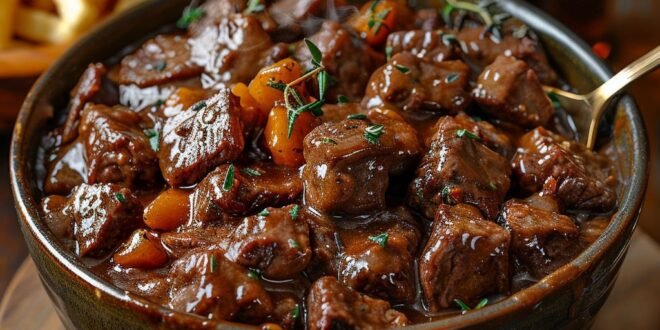
This Carbonnade Flamande recipe is Flanders' answer to the French beef bourguignon: cubes of beef braised for hours in dark beer with a mountain of sweet onions, until the sauce turns glossy, malty and gently sweet-sour. Where bourguignon uses wine, a true Carbonnade Flamande recipe uses beer — ideally a Flemish brown ale — plus a smear of sharp mustard and a slice of spice bread or gingerbread that melts into the sauce and thickens it. It serves four to six, improves overnight, and demands a bowl of crisp frites on the side.
Ingredients for This Carbonnade Flamande Recipe
- 1.2kg stewing beef (chuck or shin), cut into large cubes of about 4cm
- 4 large onions, thinly sliced
- 2 garlic cloves, finely chopped
- 750ml dark Belgian beer (a brown ale such as a Flemish oud bruin)
- 2 tablespoons plain flour
- 2 tablespoons butter, plus a splash of oil
- 1 tablespoon dark brown sugar
- 2 tablespoons red wine vinegar
- 2 bay leaves and a few sprigs of thyme
- 1 slice of spice bread or pain d'épices (or crustless brown bread), spread thickly with sharp Dijon mustard
- Salt and freshly ground black pepper
- Chopped parsley, to serve
Browning the Beef and Onions
Pat the beef dry — this is the step that decides the depth of the sauce — and season it well with salt and pepper. Heat the butter and oil in a heavy casserole over a high heat and brown the beef in batches, a single uncrowded layer at a time, until each piece carries a dark crust. Set the meat aside. Every Carbonnade Flamande recipe lives or dies on this browning: pale meat makes a pale stew.
Lower the heat, add the onions to the same pot with a pinch of salt, and cook them slowly for 20 to 25 minutes, stirring now and then, until they collapse into a sweet, golden tangle. Stir in the garlic and the brown sugar for the last two minutes. Sprinkle the flour over the onions and beef when you return the meat to the pot, stir for a minute, then pour in the vinegar and let it bubble away.
The Slow Braise
Pour in the beer, scraping up every browned fragment from the base of the pot, and add the bay leaves and thyme. No Carbonnade Flamande recipe is complete without the mustard-spread slice of spice bread laid on top — as the stew cooks it will dissolve completely, thickening the sauce and adding its warm spice. Bring everything to the gentlest simmer, cover, and cook on the lowest heat for 2½ to 3 hours, or in a low oven at 150°C, until the beef yields to a spoon. Stir occasionally and add a splash of water or beer if the sauce tightens too much.
Taste at the end and adjust the balance: the sauce should be sweet from the onions and sugar, rounded from the beer, with just enough vinegar sharpness at the back. Fish out the bay leaves and thyme stalks before serving.
Serving, Variations and Leftovers
Serve the carbonnade in deep bowls with frites — twice-cooked, crisp and well salted — and a spoonful of mayonnaise, exactly as in a Flemish brasserie. This Carbonnade Flamande recipe is traditionally a shared, generous dish: put the pot in the middle of the table and let everyone help themselves. A simple green salad with a sharp dressing cuts the richness, and the same brown beer you cooked with belongs in the glass.
A few notes from Flemish kitchens. Some cooks add a spoonful of redcurrant jelly or a handful of prunes for extra sweetness; others insist the mustard bread is non-negotiable and everything else is decoration. The stew keeps for three days in the fridge and freezes well, and like every Carbonnade Flamande recipe worth making, it tastes even better reheated the next day, when the beef has rested in its sauce overnight.