EuroDaily News and Guidance, Every Day

Related Articles


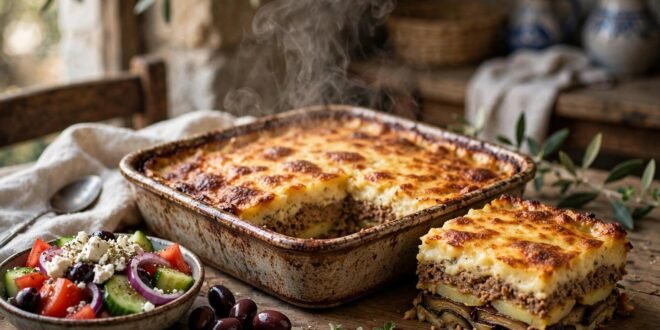
Every Greek moussaka recipe is really three recipes in one: vegetables fried until silky, a rich meat sauce scented with cinnamon, and a béchamel thick enough to set into a golden lid. It takes time, but none of the steps is difficult, and the result — a bubbling, burnished dish that slices into clean layers — is one of the great comfort foods of the Mediterranean. This version serves six generously.
Ingredients for This Greek Moussaka Recipe
For the vegetables: 3 large aubergines (about 1.2kg), sliced lengthways into 1cm slices; 3 medium potatoes, peeled and sliced into 5mm rounds; olive oil for frying; salt. For the meat sauce: 750g minced lamb; 1 large onion, finely chopped; 3 garlic cloves, crushed; 400g tin chopped tomatoes; 2 tablespoons tomato purée; 150ml red wine (optional); 1 teaspoon ground cinnamon; 1 teaspoon dried oregano; a pinch of sugar; salt and black pepper. For the béchamel: 100g butter; 100g plain flour; 900ml whole milk, warmed; 2 egg yolks; 75g kefalotyri or Parmesan, grated; a good grating of nutmeg.
Preparing the Aubergine and Potato Layers
Salt the aubergine slices and leave them in a colander for 30 minutes to draw out moisture, then rinse, pat very dry and fry in batches in hot olive oil until golden on both sides. Drain on kitchen paper. Fry the potato slices in the same pan until just tender and lightly coloured, then season. Salting and drying are not optional extras: wet aubergine drinks oil and steams instead of frying, and the finished moussaka turns greasy.
Meanwhile, make the meat sauce. Soften the onion in olive oil for 8 minutes, add the garlic, then the lamb, breaking it up and browning it well. Pour in the wine, if using, and let it bubble away. Stir in the tomatoes, purée, cinnamon, oregano, sugar, salt and pepper, then simmer gently for 25 to 30 minutes until thick, with almost no free liquid. A wet sauce is the other enemy of clean layers, so reduce it properly.
Assembling and Baking the Moussaka
Heat the oven to 180°C (160°C fan). Lightly oil a deep oven dish of about 30 by 22cm. Lay the potatoes in the base, then half the aubergine. Spoon over all the meat sauce and spread it level, then cover with the remaining aubergine.
For the béchamel, melt the butter, stir in the flour and cook for 2 minutes. Gradually whisk in the warm milk and simmer, stirring, for 5 to 8 minutes until very thick. Off the heat, beat in the yolks, most of the cheese, nutmeg, salt and pepper. Pour over the aubergine, spread to the edges and scatter the remaining cheese. Bake for 45 to 55 minutes until deep golden and bubbling at the edges.
Tips, Variations and Making Ahead
A few small choices change the character of the dish. Lamb is traditional and richest, but a half-and-half mix of lamb and beef mince is slightly lighter and is what many Greek home cooks use; all-beef works too. Some families add a layer of sliced courgette alongside the aubergine in summer, and a pinch of allspice in the meat sauce is a common island variation. For a vegetarian version, replace the mince with cooked green lentils and finely chopped mushrooms, keeping the cinnamon and oregano, and use a béchamel made exactly as above.
Moussaka also freezes well. Assemble the dish up to the end of the béchamel stage, cool it completely, wrap it tightly and freeze for up to three months; bake from frozen at 170°C, adding 20 to 25 minutes to the cooking time, or thaw overnight in the fridge and bake as normal.
Rest the moussaka for at least 30 minutes, ideally 45, before cutting — this is what gives you neat squares instead of a slump. Serve with a sharply dressed Greek salad. Leftovers keep for three days in the fridge and reheat beautifully, and the whole dish can be assembled a day ahead and baked before serving, which makes this Greek moussaka recipe a gift for entertaining.