EuroDaily News and Guidance, Every Day

Related Articles



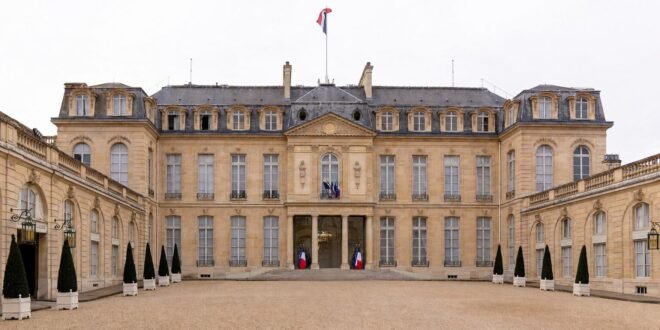
The Dominique de Villepin 2027 presidential bid is official: the former French prime minister has announced he will run for the Élysée, adding one of the most recognisable names in French politics to an already crowded field for the 2027 election.
De Villepin, a diplomat by training and a defining voice of French foreign policy for two decades, is best remembered internationally for France’s opposition to the Iraq war. At home, his candidacy speaks to voters of the traditional centre-right who have watched their political space squeezed between the far right and the radical left.
A Run-Off Nobody Can Ignore
That squeeze is the central fact of the race. Polling currently points to a second-round run-off between Marine Le Pen and Jean-Luc Mélenchon — a pairing that would force millions of centrist voters to choose between two candidates many of them distrust.
De Villepin’s calculation is straightforward: if enough voters want a different run-off, a heavyweight with governing experience and international stature could break through the first round. The risk is equally clear. Every additional credible candidate in the centre divides the same pool of voters, and French elections are littered with well-known names who discovered that recognition is not the same as momentum.
A Court Verdict From a Defining Case
Away from the campaign, a Paris court has sentenced three police officers over the 2020 beating of Michel Zecler, the Black music producer whose assault, captured on camera, became one of the defining French police-violence cases of recent years. The Zecler case helped ignite a national argument about policing, race and accountability that has never fully settled — and it continues to shadow French politics as the election approaches.
In a separate development, Paris prosecutors have opened an investigation into actor Gérard Depardieu and writer Michel Houellebecq over an alleged gang rape. Both men are towering figures in French cultural life, and the investigation is certain to attract intense attention as it proceeds. No conclusions have been reached, and the inquiry is at an early stage.
An Old Name in a New Landscape
De Villepin is not a newcomer testing the water. He has served as foreign minister and prime minister, and his opposition to the Iraq war in 2003 made him, for a time, the most internationally famous French politician of his generation. Supporters argue that this experience is precisely what France lacks in a field dominated by party machines and protest movements.
Sceptics counter that the political landscape that made de Villepin has largely vanished. The old centre-right electorate has scattered — some to Macron’s successors, some to the nationalist right — and rebuilding it around a candidate whose last spell in government ended two decades ago is a formidable task. His announcement guarantees attention; converting attention into a first-round score high enough to reach the run-off is the harder part.
The Road to 2027
France’s presidential race is still taking shape, and candidacies announced this early can fade. But de Villepin’s entry matters because it signals that the centre of French politics refuses to accept a Le Pen–Mélenchon run-off as inevitable. Between now and 2027, the contest will be shaped as much by which candidates withdraw or combine as by those who declare. De Villepin has declared — and the race is more complicated, and more interesting, for it.
Also visit our other websites: GulfCareers — Jobs in Dubai, UAE & Gulf | IndeedOne — Jobs and Information