 EuroDaily News and Guidance, Every Day

Related Articles


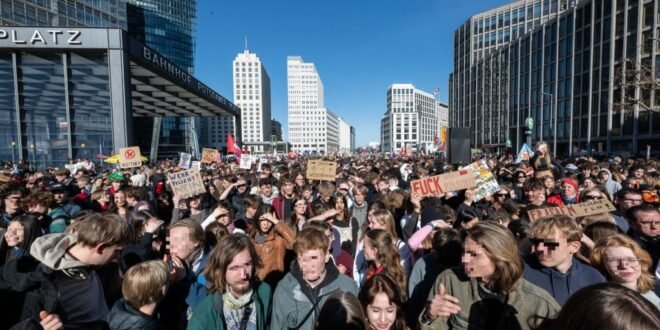
The Gen Z protests Europe November 2026 began as a German story about conscription and reform. They are now a continental one. Thousands of students marched in cities across Europe this week, and organisers count protests in 25 countries, all carrying variations of the same message: young people say they are being asked to pay — in rent, in debt and in military service — for decisions they did not make.
What started in Berlin with school students opposing rearmament has connected with a wider set of grievances: the cost of living, rising military spending and frustration over climate policy. The protests are decentralised and mostly organised online, which has made them fast-moving and hard for governments to answer with a single concession.
A Continent of Marches
In Switzerland, tens of thousands joined the protests, among the largest turnouts anywhere. In Berlin, students again took to the streets against rearmament and the prospect of a return to military service. In Italy, the unrest fed into a general strike, broadening the protests beyond students into the wider workforce.
The spread matters because it changes the politics. A protest in one country can be dismissed as local; simultaneous marches in 25 countries start to look like a generational position, and European governments are watching each other’s responses for cues on what works.
Germany’s Industry Adds to the Pressure
The protests are landing at a moment when Germany’s economic news is giving young people fresh reasons for pessimism. Lufthansa, the country’s flagship airline group, is cutting 1,000 jobs. Mercedes-Benz, one of the pillars of German industry, has suspended investments in Germany and is considering factory closures.
For students marching against austerity and military spending, headlines about job cuts at Lufthansa and retreat at Mercedes-Benz fit a narrative: that the economy they are about to enter is shrinking its offers to them while expanding its demands. Whether or not that narrative is fair, it is powerful recruiting material, and it links the street protests directly to the boardroom decisions of Germany’s biggest names.
One Movement, Many Grievances
What unites the marches is less a single demand than a shared refusal. In Germany the spark was conscription; elsewhere it is rent, tuition, pensions reform or the feeling that defence budgets grow while youth services shrink. Organisers have been careful to let each city’s protest carry its own local grievance under a common banner, which has made the movement harder to characterise — and harder to buy off with a single policy concession.
That looseness is also a weakness. Without leaders or a negotiating table, there is no one for a government to settle with, and movements that cannot declare a victory sometimes struggle to sustain themselves. For now, though, turnout is rising rather than falling, and each weekend’s marches are being planned in the group chats of the last.
What Governments Do Next
Germany’s government now faces pressure from two directions at once — from young citizens in the streets and from industrial giants warning that the country is becoming uncompetitive. The protests show no sign of being a one-week story. With demonstrations established across Europe, the question for Berlin and its neighbours is whether to offer the young a concrete stake — on housing, on service, on climate — or to wait for the marches to tire. So far, the marches are not tiring.
Also visit our other websites: GulfCareers — Jobs in Dubai, UAE & Gulf | IndeedOne — Jobs and Information
