EuroDaily News and Guidance, Every Day
Related Articles


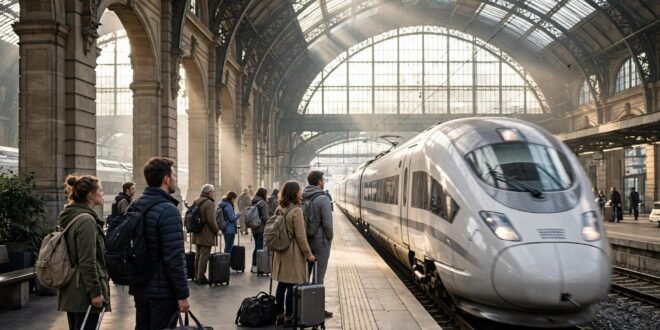
European train passes changed in 2026: since 10 September, the Eurail name has been folded into Interrail, so a single pass now covers rail travel in 33 countries for visitors and residents alike. The product underneath is the same one travellers have used for decades, one ticket that replaces dozens of individual fares, but the prices, the app and the reservation rules are worth understanding before you buy.
The Global Pass is the flagship option. It is sold either as a set number of travel days to use within a month or two, or as a continuous pass for a fixed period. A travel day runs from midnight to midnight and allows unlimited trains within it, which makes the pass as much a tool for spontaneity as for savings: you can cross three countries in a day and it still counts once.
Choosing Between European Train Passes
For adults travelling second class, the 2026 Global Pass prices start at €283 for four travel days within one month, €381 for seven days within one month, €447 for ten days within two months and €553 for fifteen days within two months. Continuous passes cost €476 for fifteen days or €696 for a full month. Travellers aged 12 to 27 pay about 25 percent less, seniors over 60 get 10 percent off, and children aged four to eleven travel free with an adult pass holder. First class costs roughly a third more.
If your trip stays inside one country, a One Country Pass is cheaper, and there are regional options such as the Benelux Pass, covering Belgium, the Netherlands and Luxembourg, and the Nordic Pass for Scandinavia. Passes bought before the September name change remain valid on their original terms, and everything is now managed digitally in the Rail Planner app, where each journey must be added and the travel day activated before you board.
The Reservation Trap
The pass is the fare, but it is not always the seat. In Germany, Austria, Switzerland, the Netherlands, Belgium and Czechia you can board most trains with the pass alone, adding an optional seat reservation for a few euros if you want one; a German ICE seat costs €5.50 and an Austrian Railjet seat €3. In France, Italy and Spain, however, high-speed trains require a compulsory paid reservation on top of the pass: roughly €10 to €20 on a domestic French TGV, €13 on an Italian Frecciarossa and around €10 on a Spanish AVE. Eurostar services to London carry a €35 passholder fee and a limited quota of pass seats, and night trains such as ÖBB's Nightjet always need a reservation, from about €19.90 for a couchette berth.
These fees are the single biggest reason a pass can disappoint. A route built around French, Italian and Spanish high-speed trains can accumulate €50 or more in reservations, while the same pass in central Europe costs nothing extra at all.
When a Pass Pays Off
The maths is simple in principle. A pass wins when you travel long distances at short notice, change plans often, or tour countries where walk-up fares are expensive and reservations are rare, Germany, Austria and Switzerland above all. It loses when your itinerary is fixed months ahead, because advance point-to-point tickets on routes like Paris to Lyon or Milan to Rome are often cheaper than a travel day plus its reservation fee. Note too that trains within the United Kingdom are not included; British domestic rail has required a separate BritRail pass since 2024.
Used well, European train passes remain the most flexible way to see the continent: board in Amsterdam at breakfast, decide over coffee whether lunch is in Cologne or Brussels, and let the timetable, not a booking made in March, set the route.
Also visit our other websites: GulfCareers — Jobs in Dubai, UAE & Gulf | IndeedOne — Jobs and Information