EuroDaily News and Guidance, Every Day
Related Articles



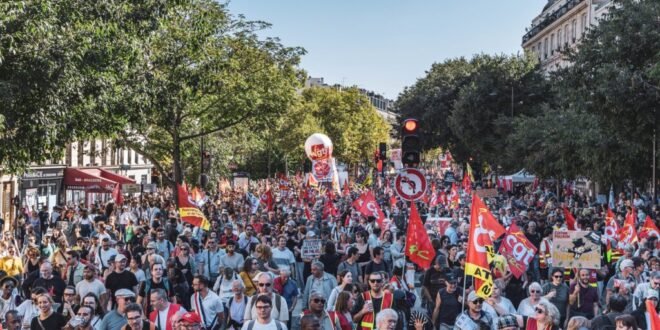
The France December 1 strike is set to bring public sector workers across the country out on strike and onto the streets next Tuesday, after eight major trade unions issued a joint call for a nationwide day of action over pay and purchasing power. The France December 1 strike will be the fourth nationwide mobilisation since September, and it follows an autumn of rolling protest that shows little sign of easing.
France December 1 Strike: Who Is Calling It and Why
The eight unions behind the France December 1 strike — CGT, FO, CFDT, UNSA, FSU, Solidaires, CFE-CGC and FA-FP — issued their joint call on Friday 20 November. Their central demand is an immediate increase in the civil service index point, the index used to calculate basic salaries for France's approximately 5.8 million public sector employees. The index point's value has remained frozen, and the government has ruled out an increase in 2027 for the fourth consecutive year.
The unions say the freeze is steadily cutting real pay: they estimate purchasing power has fallen 16% since 2017, and warn that if the index point stays frozen, the lowest public salaries will remain at or just above the minimum wage. Alongside the increase, they want the index point linked to inflation, an overhaul of salary scales to improve career progression, equal pay and career opportunities for men and women, the abolition of the one-day waiting period for sick leave, and proper funding for quality public services. Three unions — CFDT, CGT and UNSA — have also invited private sector employees to join the mobilisation, accusing employers of delaying wage negotiations.
A Fourth Day of Action in a Long Autumn
The France December 1 strike follows nationwide days of action on 29 September, 5 November and 17 November. Turnout figures remain contested: the 17 November mobilisation drew more than 500,000 demonstrators according to the CGT, while the Interior Ministry estimated attendance at approximately 146,000. In the Alpes-Maritimes and Var departments alone, around 1,500 protesters gathered in Nice and Toulon. Saturday 21 November then brought a sixth consecutive weekend of cost-of-living protests, drawing 82,500 people according to the Interior Ministry and 150,000 according to organisers — lower than the October peak, but evidence that the movement has endurance.
The strike call came despite a rare opening from the government. On 13 November, union leaders met Prime Minister Sébastien Lecornu — the first such meeting in nearly two decades — where the government proposed a month-long consultation covering five areas, including emergency measures to address low wages. Union representatives left disappointed that no immediate increase in the index point was announced, and a further meeting between the government and unions is scheduled for 11 December, ten days after the strike.
What to Expect on the Day
Local arrangements for the France December 1 strike, and its likely impact on schools, hospitals, town halls and other public services, have yet to be confirmed, and participation rates among state employees have fluctuated — higher on 5 November than on 17 November. Unions are expected to file local strike notices in the coming days, and turnout for the France December 1 strike will be read as a verdict on the government's consultation offer. What is clear is that the France December 1 strike is no longer only about the index point: it has become the focal point of a broader confrontation over pay, prices and the funding of public services that has run since mid-September, when student mobilisations over school conditions first took to the streets of Paris and its suburbs. Whether the government offers more before Tuesday — or waits for the 11 December meeting — will decide whether this is the last strike of the autumn, or merely the latest.
Also visit our other websites: GulfCareers — Jobs in Dubai, UAE & Gulf | IndeedOne — Jobs and Information