EuroDaily News and Guidance, Every Day
Related Articles



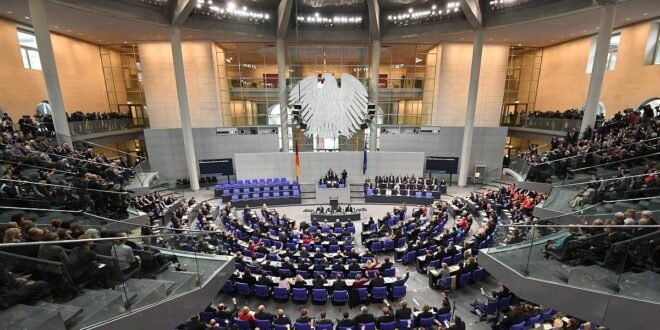
The Germany 2027 budget vote reaches its decisive stage this week, as the full Bundestag prepares to vote on a €560.92 billion federal spending plan for 2027 during the parliamentary sitting week of 24 to 27 November. The package, cleared by the budget committee after an all-night session, pairs record investment with the second-highest level of postwar borrowing — and the Germany 2027 budget vote has become the defining test of Chancellor Friedrich Merz's coalition.
Germany 2027 Budget Vote: How the Package Reached the Plenary
The budget committee approved the plan in an "adjustment session" that began on Thursday afternoon and ended at 5:55 a.m. on Friday 13 November. Merz's CDU/CSU bloc and its Social Democratic coalition partners backed the package, while the AfD, Greens and Left Party voted against. Total planned spending of €560.92 billion is 6.9% above the €524.54 billion budgeted for 2026, with tax revenue put at €396.21 billion.
The borrowing figures explain why the Germany 2027 budget vote has drawn such scrutiny. Counting the core budget and special funds together, total new borrowing reaches €210.4 billion, according to figures reported by Reuters — just below the €215.4 billion raised during the 2021 coronavirus emergency. Core-budget net borrowing is set at €122.97 billion, of which €84.55 billion is excluded from the constitutional debt-brake calculation under the exception for defence and specified security spending. Borrowing that does count under the debt rule is €38.43 billion — exactly at the permitted ceiling.
Where the Money Goes
Defence is the big winner: the Defence Ministry's budget remains €109.75 billion, with multi-year defence commitments increased by nearly €5 billion to €296.88 billion, plus further spending from the Bundeswehr special fund. The Labour and Social Affairs Ministry again holds the largest departmental budget at €203.29 billion, while investment in the regular budget was raised by €5.58 billion to €61.85 billion. Transport was set at €25.35 billion, with money shifted from the federal motorway company towards rail investment grants. Separately, the Bundestag has approved €5.525 billion a year from 2027 to 2029 to subsidise electricity transmission grid fees.
The final committee text also records what the coalition gave up to reach agreement. A plastics-packaging tax agreed by the cabinet in July was removed, a tax on sweetened drinks was delayed until 2028, a planned reduction in electricity tax was deferred, and negotiators rolled back planned benefit reductions for children in low-income families. Each concession tells the story of the Germany 2027 budget vote bargaining between Merz's conservatives and their centre-left partners.
A Government Ahead in Parliament, Behind in the Polls
Beyond the numbers, the Germany 2027 budget vote carries a political weight that the committee stage could not settle. The political backdrop is uncomfortable. ZDF's Politbarometer on 13 November put the far-right AfD at 28%, six points ahead of the CDU/CSU on 22%, with the two governing parties together reaching only 35% — short of a majority if an election were held today. The same survey found 59% of respondents opposed very high federal borrowing, including 54% of CDU/CSU supporters. The Germany 2027 budget vote is therefore a test of whether a coalition can govern decisively while trailing in the polls.
The economic case rests on growth: the German Council of Economic Experts forecasts expansion of 1.3% in 2026 and 1.0% in 2027, supported principally by exports and government spending, though it warns of pressure on public finances from defence expenditure and interest costs. If the plenary approves the budget law — formally document 21/7300 — the Germany 2027 budget vote still leaves two steps: review by the Bundesrat and signature by the Federal President, both needed before the plan takes effect on 1 January 2027.
Also visit our other websites: GulfCareers — Jobs in Dubai, UAE & Gulf | IndeedOne — Jobs and Information