EuroDaily News and Guidance, Every Day

Related Articles



The France protests November 2026 entered their sixth consecutive Saturday this weekend, as tens of thousands of people marched across the country against a new law extending legal protection for police officers who use their weapons. The Interior Ministry put nationwide turnout at 82,500, including 21,500 in Paris, while organisers claimed 150,000 took part.
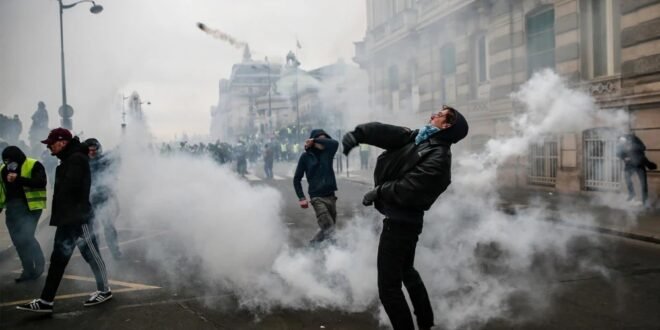
Police made 144 arrests by 18:00, and there were clashes and tear gas at Place de la Nation in Paris and in Marseille, Toulouse, Lyon and Strasbourg. The movement is smaller than it was — the ministry counted 106,000 last Saturday — but it is not going away, and organisers have now called a general strike for 1 December.
The Police Law Behind the France Protests November 2026
The trigger for the demonstrations was the Senate's decision on Friday to adopt a law extending legal protection for police who use their weapons. Critics have branded the measure a "licence to kill", arguing it weakens accountability when officers open fire.
That phrase has become the movement's rallying cry, printed on banners and repeated in chants across the country. Supporters of the law present it as overdue protection for officers facing violent situations; opponents see it as a blank cheque. Six Saturdays of marching show which side has so far been better at mobilising the public.
A National Movement, Not Just a Paris One
The geography of Saturday's clashes underlined that this is a national movement rather than a Parisian one. Tear gas was used at Place de la Nation in the capital, but confrontations were also reported in Marseille, Toulouse, Lyon and Strasbourg — a spread across the country's largest cities that organisers point to as proof the law has angered people well beyond the usual protest circles.
Smaller Crowds, Wider Demands
Falling turnout is normal for protest movements, and the drop from 106,000 to 82,500 on the ministry's count follows that pattern. But the call for a general strike on 1 December marks an attempt to change the contest's terrain — from weekend marches, which governments can often wait out, to a stoppage designed to disrupt the working week.
A general strike raises the stakes for both sides. For unions and protest organisers, it tests whether sympathy on the streets translates into willingness to stop work. For the government, it brings the dispute into transport, schools and public services, where disruption is felt by people who have not marched at all.
What Happens Next
The coming week will show whether the strike call gathers support beyond the movement's core. Union responses, and any sign of negotiation over the police law, will decide whether 1 December becomes a turning point or another date in a long campaign.
For now, the pattern is set: another Saturday of marches, another round of clashes in the big cities, and a government facing a protest movement that, even as its numbers dip, keeps finding new ways to keep the pressure on.
Also visit our other websites: GulfCareers — Jobs in Dubai, UAE & Gulf | IndeedOne — Jobs and Information