 EuroDaily News and Guidance, Every Day

Related Articles


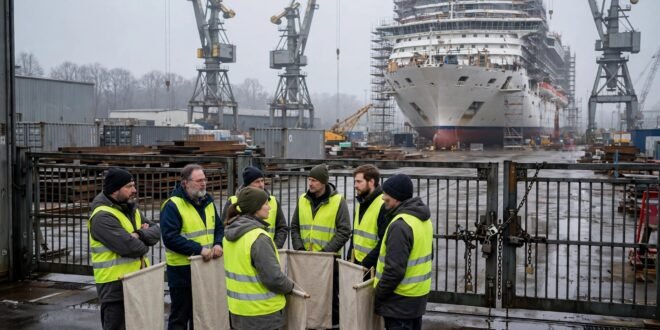
The IG Metall strikes rolling across Germany escalated again on Tuesday, as the country's largest industrial union called nearly 40,000 employees at 22 companies in the northern coastal region out on 24-hour stoppages. The walkouts, which began on 20 November, span the automotive, shipbuilding, steel and electrical engineering industries, and are designed to build what the union calls a "wave of pressure" on employers in a hardening wage dispute.
What the IG Metall Strikes Are Demanding
IG Metall is demanding a 5% wage increase and guarantees on job security, and it wants to keep the 35-hour week in the industries it covers. Those demands land in a sector already under strain from weak demand, high energy costs and the expensive transition to electric vehicles, which is why employers are resisting and why the dispute has spread so quickly from warning strikes to full-day stoppages.
Production lines in Leipzig felt the dispute on Monday, when warning strikes paused work at BMW and Thyssenkrupp plants in the city. The full-day strikes are a step up in intensity: instead of short demonstrations during pay talks, whole shifts are being lost at some of Germany's most important industrial sites.
Monday's Walkouts: Mercedes, Shipyards and Wind Turbines
Monday's hardest-hit company was Mercedes-Benz, where 12,700 workers joined the stoppage at plants in Hamburg and Bremen. Around 6,000 employees from five shipyards and marine-related companies walked out, including nearly 3,600 at the Meyer Werft shipyard in Papenburg, one of the world's leading cruise ship builders, and about 500 at KS Gleitlager.
Factory gates stayed closed at wind turbine manufacturer Siemens Gamesa in Cuxhaven, where 1,370 employees joined a strike that began at 8pm on Sunday, and at Lear Corporation in Bremen, with more than 1,200 workers, and Manitowoc in Wilhelmshaven, with over 960. A Siemens Gamesa spokesperson said organising in a union was employees' right and that the company trusted the bargaining parties to find a solution balancing workers' interests with competitiveness.
Tuesday's Escalation Centres on Airbus
Tuesday's action is bigger still. Roughly 34,000 of the nearly 40,000 workers called out work at Airbus facilities in Hamburg, Bremen, Stade, Nordenham and Varel. Liebherr in Rostock, the Ariane Group in Bremen and Flowserve in Itzehoe are also affected. The escalation follows a first full-day wave on 19 November, when more than 12,000 employees from 17 companies, including TKMS in Kiel and Wismar, STILL in Hamburg and Bremen and the Neptun shipyard in Rostock, stopped work.
"Our workers are demonstrating how serious they are. And tomorrow, with nearly 40,000 employees taking part, we will send another powerful signal," said Daniel Friedrich, district manager and lead negotiator for IG Metall's coastal region.
Employers Call the Strikes Irresponsible
Employers have reacted angrily. The VDMA, the association for German and European mechanical and plant engineering companies, called the escalation "irresponsible". Its managing director, Thilo Brodtmann, said many companies in the sector are fighting for survival amid weak demand and high costs, that all-day strikes are excessive, and that they disrupt supply chains reaching firms with no part in the dispute. He also attacked the union's defence of the 35-hour week as out of step with the times.
The dispute also has a regional rhythm that makes it hard to settle quickly. Pay agreements in the metal and electrical industries are negotiated district by district, so pressure built up on the northern coast does not automatically translate into a national deal. Each new wave of stoppages is meant to raise the cost of holding out in the districts still at the table, while employers coordinate their own response through their associations. That is why a conflict that began with short warning strikes in individual plants has grown, within days, into coordinated full-day action across whole industrial regions.
With both sides digging in and no settlement in sight, the IG Metall strikes are becoming a test of strength for German industry at its most fragile moment in years: a union determined to protect pay and hours, and employers warning that every lost day pushes work, and jobs, somewhere else.
Also visit our other websites: GulfCareers — Jobs in Dubai, UAE & Gulf | IndeedOne — Jobs and Information
