EuroDaily News and Guidance, Every Day


Related Articles



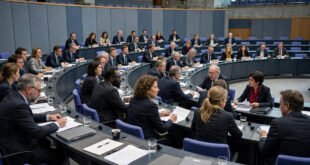
The Germany 2027 budget debate opened its final round in the Bundestag on Tuesday 24 November, as Finance Minister Lars Klingbeil presented a spending plan of €560.92 billion — the largest in the country's history. Lawmakers will debate the individual ministry budgets through the week in second and third readings, with the final vote scheduled for Friday 27 November. The figures are largely locked in: the budget committee settled them in a marathon clean-up session on 13 November, but the opposition is using budget week to attack the scale of new borrowing and the tax cuts that were promised and then dropped.
The Numbers Behind the Germany 2027 Budget Debate
The committee's version of the budget plans €560.92 billion in spending, up from €524.54 billion in 2026, with €122.97 billion of new borrowing in the core budget and total investment of €126.7 billion. Roughly one euro in three of the wider package is financed by debt, made possible by last year's reform of the constitutional debt brake and the special funds for defence and infrastructure championed by Chancellor Friedrich Merz's coalition of the CDU/CSU and SPD.
The clean-up session — the Bereinigungssitzung — ran from Thursday afternoon until 5:55 on Friday morning and voted on around 2,000 motions. It passed with coalition votes, while the AfD, the Greens and the Left voted against and every opposition amendment failed. Among its decisions:
- The planned plastics tax was dropped altogether
- The planned sugar tax was delayed until 1 January 2028
- A broad, permanent cut in electricity tax for households was shelved
- A subsidy of €5.525 billion a year from 2027 to 2029 was approved to hold down electricity grid fees
Electricity Tax: the Last Open Wound in the Germany 2027 Budget Debate
The electricity tax has been the coalition's running sore. Voters were promised relief, the committee shelved the general cut, and the coalition has since agreed a temporary electricity tax cut worth roughly €5 billion for one year instead, alongside the grid fee subsidy. Expect the opposition to return to the point all week: the Greens and the Left accuse the government of breaking its word to households, while the AfD attacks the borrowing itself.
The government counters that the package directs money where it counts — defence, infrastructure and industrial competitiveness — and that the grid fee subsidy delivers visible relief on every bill without a permanent hole in the budget. Whether that argument survives contact with voters' actual electricity bills in 2027 is another matter.
Business groups have broadly welcomed the investment plans while warning about the debt trajectory. The €126.7 billion investment line includes money for rail, roads, digital networks and defence procurement, and industry federations argue that Germany's crumbling infrastructure has itself become a brake on growth. Fiscal conservatives inside the CDU/CSU, meanwhile, are uneasy about normalising borrowing on this scale just a year after the debt brake was rewritten, and several have used the debate to demand a binding plan for consolidation from 2028. The finance ministry's answer is that tax revenues will recover with growth, and that the special funds are time-limited by design.
What Happens After Friday's Vote
Passage on Friday is considered near-certain, because the committee deal reflects trade-offs the coalition partners have already accepted. After the Bundestag, the budget goes to the Bundesrat, the chamber representing the federal states, and then needs the Federal President's signature to become law before 1 January 2027.
The deeper argument of this Germany 2027 budget debate will not end on Friday, however. Germany is spending at record levels and borrowing at a pace that would have been unthinkable before the debt brake reform, while growth remains weak. The 2028 budget talks, starting in the spring, will test whether this week's majority holds when the special funds begin to run down.
Also visit our other websites: GulfCareers — Jobs in Dubai, UAE & Gulf | IndeedOne — Jobs and Information