EuroDaily News and Guidance, Every Day

Related Articles


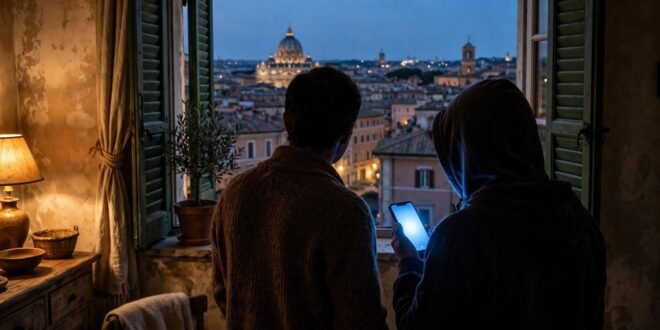
The Italy social media ban planned by Giorgia Meloni's government does not go far enough, according to the parents' association that is suing Meta and TikTok over the harm it says the platforms cause to children. The coalition is expected to pass a law by the end of this year forbidding minors under 13 from signing up to social media accounts, but campaigners argue that without enforcement and action against the algorithms themselves, the measure will change little for the millions of Italian children already online.
What the Italy Social Media Ban Would Do
The bill now in parliament would bar children under 13 from opening social media accounts altogether. Teenagers aged 13 to 15 would be allowed accounts only if they are linked to those of a parent, and social media companies would be required to verify users' ages using guidelines set by the communications watchdog. Fabio Rampelli, a senior figure in Meloni's Brothers of Italy party, has called the bill "a decisive turning point for parents struggling with their children's digital addiction". Public support appears strong: a poll published this week found 80% of Italians backing the government's planned ban for under-13s, although support dropped to 55% among 18 to 24-year-olds.
Parents Say Existing Rules Are Already Ignored
Moige, the Italian parents' movement, says the debate misses the point. "There are three million minors in Italy under 14 who are using social media," said its head, Antonio Affinita. "There is already a rule that is meant to stop unsupervised use, but it is not enforced." He also dismissed the plan for parental consent for 13 to 15-year-olds, arguing that it "allows the social media companies to unload responsibilities on parents who are often not tech savvy enough to act". Moige wants tougher enforcement of a ban covering teenagers up to and including the age of 13, and it has backed up its words with a class action launched this year against TikTok and Meta, the owner of Facebook and Instagram, demanding an under-14 ban and the scrapping of what it calls "predatory algorithms" that lure minors into hours of internet use.
A Court Verdict Delayed, and a Mother's Campaign
The legal and political tracks are now intertwined. Judges were due to rule on Moige's case last week, but they postponed their verdict until 21 January to see the law the government will pass. Stefano Bertone, the lawyer representing Moige, criticised the delay, saying the court had been told "a very clear" message that "an injunction was needed today, given the urgency of the situation and the cases linked to pathological social media addiction that occur every day and every week". Behind the statistics are families such as that of Mirna Mastronardi, whose 15-year-old daughter Dea took her own life in 2024 after being driven into depression by social media. Mastronardi, who now speaks in schools about the dangers, met Meloni and received a promise of action. "She has, and the planned law is a step forward, but it's not enough," she said.
Italy Follows a Global Turn Against Teen Social Media
Italy is not moving alone. Australia last year forbade under-16s from using the big social media platforms, the strictest regime of its kind, and governments across Europe are under growing pressure from parents, doctors and teachers to act on children's screen time. Meta and TikTok have fought Moige in court, arguing that they operate filters to remove harmful material, but the political momentum in Rome is now clearly against them. The test of the Italy social media ban will come after it passes: whether age verification is real, whether platforms face meaningful penalties, and whether the January court ruling pushes ministers to go further than the bill now before parliament.
Also visit our other websites: GulfCareers — Jobs in Dubai, UAE & Gulf | IndeedOne — Jobs and Information