EuroDaily News and Guidance, Every Day
Related Articles



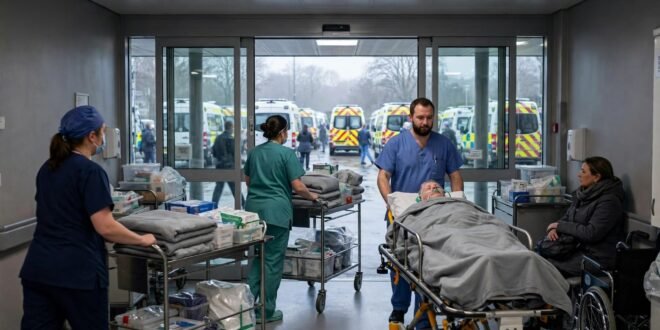
The NHS winter crisis appears to have arrived weeks ahead of schedule. Hospitals in England recorded 2.5 million emergency department attendances in October 2026, a record for the month, and doctors warn that the pressures usually associated with the depths of winter are already here, with flu, Covid and other seasonal illnesses still to peak.
The most striking figure concerns patients who needed a bed. Nearly 58,000 people waited more than 12 hours after doctors decided to admit them, up about 7 percent from 54,310 in October last year. A decade ago, in the winter of 2016-17, only 3,502 patients waited that long, meaning the figure is now more than 16 times higher.
The Numbers Behind the NHS Winter Crisis
An average of 3,558 patients a day received care in hospital corridors or other temporary areas during October, the highest since that data began being collected in May. Of those, 2,718 were in emergency departments and 840 elsewhere in hospitals. Only 74 percent of emergency patients were seen within four hours, far below the long-standing 95 percent target.
Ambulance services are under similar strain. The average response time for serious emergencies such as suspected heart attacks and strokes reached 32 minutes and 45 seconds in October, almost twice the 18-minute national standard. At the Royal Stoke hospital, ambulance handover times averaged almost two hours in October against a 15-minute standard, and some patients waited up to 11 hours, although early November figures suggest waits there could fall below 30 minutes after a series of actions by the trust.
What the Government Has Put in Place
Ministers point to a package of measures prepared since the summer. In July, NHS England wrote to health leaders setting out expectations for winter 2026-27. In October the government announced £140 million for 14 urgent care schemes and highlighted the expansion of Pharmacy First and enhanced GP access through evening, weekend and out-of-hours appointments. The Autumn Budget on 28 October added a further £190 million for NHS England to manage winter pressures, and on 9 November the government announced a £40 million programme for GPs to support up to 300,000 vulnerable patients to stay well at home and avoid hospital admissions.
In September, ministers also announced a new taskforce to put summer planning on the same footing as winter planning, after repeated heatwaves put services under pressure during the summer of 2026. The move was a recognition that the traditional winter spike is increasingly becoming a year-round problem.
Alongside the hospital measures, NHS leaders have been urging the public to prepare at home. Health bosses have published lists of essential medicines and supplies that households should keep stocked up before winter, so that minor illnesses can be treated without a trip to a pharmacy, GP or emergency department, and have repeated the annual call for everyone eligible to take up flu and Covid vaccinations. Prevention, officials argue, is one of the few levers that can reduce the number of people arriving at A&E in the first place, particularly among older patients and those with long-term conditions whose health deteriorates fastest in cold weather.
Why Doctors Fear the Worst Is Still to Come
Stakeholders remain concerned about how the service will cope as temperatures fall. Cold weather raises the risk of heart attacks, strokes, hypothermia and falls, and can worsen long-term conditions such as asthma and diabetes. Seasonal viruses have yet to reach their peak, and hospitals are starting from a position in which beds are already occupied by patients waiting for social care or discharge arrangements.
Clinicians say the pattern visible in October, record demand, long waits and corridor care becoming routine, is exactly what they would expect in January, not in the autumn. If the NHS winter crisis is already this intense before the coldest months arrive, the question for ministers and hospital leaders is not whether the coming weeks will be difficult, but whether the extra funding and planning announced this year can prevent a bad winter from becoming a record-breaking one.
Also visit our other websites: GulfCareers — Jobs in Dubai, UAE & Gulf | IndeedOne — Jobs and Information