EuroDaily News and Guidance, Every Day

Related Articles


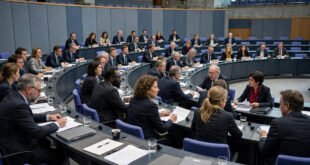
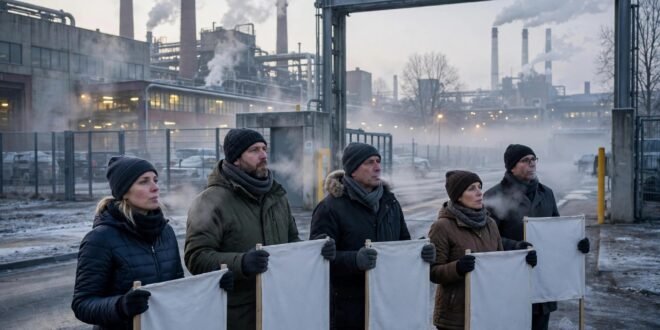
The Volkswagen wage talks began in the northern German town of Emden on Tuesday against a backdrop of protests and threatened strikes, as Europe's largest carmaker tries to push through a new round of cost cuts that its unions say tears up a landmark agreement struck less than two years ago.
Several hundred workers were expected to demonstrate before representatives of the IG Metall union and Volkswagen's works council sat down with management. The choice of venue was pointed: Emden is home to one of the factories fighting for survival under the group's restructuring plans, which envisage 100,000 layoffs worldwide and possible closures at four German plants early next decade. The group's 120,000 German workers have been told that domestic production has become too expensive.
What Is at Stake in the Volkswagen Wage Talks
Volkswagen wants to freeze German workers' pay in 2027 and 2028 and cut a range of benefits. Management is also seeking concessions on the union's hard-won 35-hour week, asking staff to work longer on the same pay when needed. According to a letter sent last Thursday, the company wants to abolish special wage agreements for managerial staff and the anniversary bonuses paid to workers marking 25 and 35 years at the company. It also wants to end paid 20-minute breaks in the factories' three-shift system and remove the paid leave workers currently receive on Christmas Eve and New Year's Eve.
The pressure behind the demands is real. Intensifying competition from China, billions of euros in annual tariff costs and rapid technological change have squeezed the world's number two carmaker, and its core operating margin is expected to be no more than 1 percent this year, down from 5.9 percent in 2024. Volkswagen's China sales, which long helped offset high German production costs, have slumped further.
A 2024 Deal Under Strain
The union's central argument is that Volkswagen is breaking its word. The landmark restructuring deal agreed in late 2024 included 35,000 layoffs in return for employment and investment guarantees. IG Metall says the renewed restructuring push violates that agreement, and it has warned that strikes could begin from January 1 if the company does not back down.
That 2024 agreement was itself a watershed. For the first time in the company's history, plant closures in Germany were openly discussed, and the deal that averted them traded tens of thousands of job losses, achieved through natural attrition and severance rather than compulsory redundancies, for commitments to keep the remaining German sites and invest in their future. Workers accepted the sacrifice precisely because it was presented as a one-off settlement that would stabilise the company for the rest of the decade. A fresh round of cuts, arriving barely two years later and now reaching into pay, breaks and bonuses, is therefore being read on the shop floor not simply as bad news but as bad faith.
There is a tense wider debate in Germany over the competitiveness of domestic carmaking, with high labour costs, estimated at around €65 an hour and among the highest in the world, at the centre of the argument. Sector-wide warning strikes in the auto and steel industries have already underlined how quickly the dispute could escalate beyond a single company.
What Happens Next
The Emden meeting is only the first round, and neither side is expected to give ground quickly. Emden itself shows what is at stake: the plant, one of the sites whose future was guaranteed under the 2024 deal, builds electric models such as the ID.7 and employs thousands of people in a region with few comparable employers. What is agreed, or fought over, there will set the pattern for the group's other German factories.
But the calendar matters: the union's strike threat has a date attached, and the turn of the year is now the deadline both sides are working against. For Chancellor Friedrich Merz's government, already fighting to revive German industry, a prolonged stoppage at the country's most emblematic manufacturer would be the worst possible start to 2027. The Volkswagen wage talks will test whether Germany's model of negotiated restructuring can survive the harshest cost pressures the industry has faced in decades.
Also visit our other websites: GulfCareers — Jobs in Dubai, UAE & Gulf | IndeedOne — Jobs and Information