EuroDaily News and Guidance, Every Day
Related Articles



This pierogi ruskie recipe is the one Polish grandmothers guard most proudly: soft, hand-crimped dumplings filled with potato and tangy white cheese, boiled until tender and buried under sweet fried onions. Despite the name, "ruskie" refers to Red Ruthenia, the historical region the dish comes from — not to Russia. The recipe makes about 40 pierogi, enough for four generous servings.
Ingredients for This Pierogi Ruskie Recipe
For the dough:
- 500g plain flour, plus extra for dusting
- 1 egg
- About 250ml warm water
- 1 tablespoon oil or sour cream
- 1 teaspoon fine salt
For the filling:
- 600g floury potatoes, peeled
- 250g twaróg or farmer's cheese (dry curd cottage cheese works too)
- 1 large onion, very finely diced
- 30g butter, for frying the onion
- Salt and plenty of freshly ground black pepper
To serve: extra butter and onions fried until golden, or crispy bacon bits (skwarki), plus a bowl of sour cream.
Making the Filling and Dough
Boil the potatoes in salted water until completely tender, then drain them very well and leave them to steam dry — wet potatoes make a sloppy filling. While they cook, fry the diced onion in butter over a low heat until soft and golden, about 10 minutes. Mash the hot potatoes with the cheese, stir in the onion and its butter, and season assertively with salt and pepper. The filling should taste bold; it will mellow inside the dough. Leave it to cool completely.
For the dough, tip the flour and salt into a bowl, make a well, and add the egg, oil and most of the warm water. Mix to a shaggy dough, adding the last of the water only if needed, then knead for 8 to 10 minutes until smooth and elastic. Cover and rest for at least 30 minutes — this relaxes the gluten and makes rolling far easier.
Shaping and Cooking the Pierogi
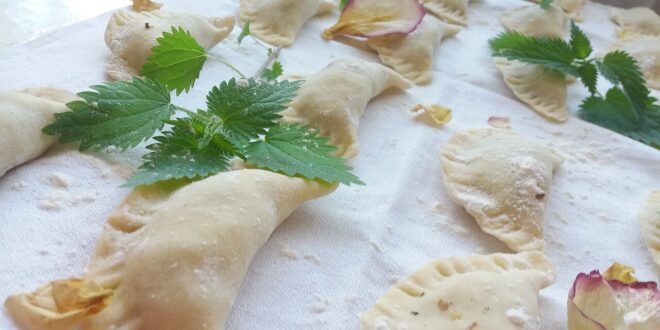
Roll the dough out on a floured surface to about 2mm thick. Cut circles with a glass or cutter of roughly 8cm, place a heaped teaspoon of filling in the centre of each, fold into a half-moon and pinch the edges firmly to seal, making sure no filling touches the seam. Lay the finished pierogi on a floured tray under a cloth so they do not dry out.
Bring a large pot of salted water to a rolling boil. Cook the pierogi in batches: once they float to the surface, give them 1 to 2 minutes more, then lift them out with a slotted spoon and toss them in a little butter so they do not stick together.
Serving and Storing
Serve the pierogi in classic style — straight from the pot, spooned over with hot fried onions and their butter, with sour cream on the side. Leftovers are arguably even better the next day, fried in butter until the bottoms turn crisp and golden.
Uncooked pierogi freeze beautifully: freeze them in a single layer on a floured tray, then bag them and cook from frozen, adding a minute to the boiling time. Once you have mastered this pierogi ruskie recipe, try the same dough with sauerkraut and mushroom, or minced meat, fillings.
A few variations are worth knowing. Some cooks add a pinch of sugar to balance the cheese; others stir in chopped mint. Pierogi with sauerkraut and wild mushrooms are the classic Christmas Eve version, served during the meatless Wigilia supper, and sweet pierogi filled with blueberries or cherries, served with cream and sugar, are a summer favourite. The ruskie filling itself travelled west with families resettled from Poland's former eastern borderlands after the Second World War, which is how a regional dish became the country's most recognised dumpling. Whatever the filling, the rules stay the same: soft dough, a dry, well-seasoned centre, and a seal you can trust.