EuroDaily News and Guidance, Every Day

Related Articles



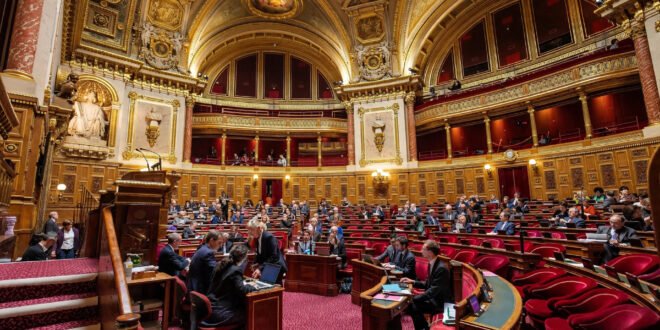
France's upper house has voted to tax the daily allowances paid to people with long-term illnesses in full, going well beyond the government's own proposal and setting up another clash over the 2027 social security budget. The Senate illness allowance tax measure was adopted on Monday by 194 votes to 146, as senators rewrote one of the most sensitive articles of the financing bill.
What the Senate Illness Allowance Tax Vote Changed
The Senate's right-wing and centrist majority amended Article 2 of the bill, which covers the taxation of replacement income, to subject the daily allowances received for long-term conditions — known in France as ALD, for affections de longue durée — to income tax in full.
That is a significant hardening of the government's position. The bill introduced by the government, and rejected by the National Assembly, provided for taxing these allowances on only half of their amount, a version that was expected to bring in €965 million for the state. The Senate also voted to subject the daily allowances for workplace accidents and occupational diseases to income tax in full.
Alongside the income tax change, the article raises the rate of the general social contribution (CSG) applied to sickness daily allowances from 6.2 per cent to 9.2 per cent. The increase, which would apply from 1 January 2027 and covers allowances linked to long-term conditions, workplace accidents and occupational diseases, is expected to raise €540 million for Social Security.
A Budget Battle on Two Fronts
The vote underlines how far apart France's two chambers remain on financing social protection. The National Assembly rejected the government's softer version of the measure; the Senate has now approved a tougher one. Neither text commands support in both houses.
The next step comes on Thursday, when seven MPs and seven senators meet in a joint committee to try to thrash out a compromise on the social security budget for 2027 as a whole. Any agreement — and observers rate the chances as slim — would go back to both chambers for approval. Without one, the bill faces a new reading, government orders, or possible recourse to Article 49.3 of the constitution, which allows a text to be adopted without a vote unless the government is censured.
Social security accounts for more than 40 per cent of France's public spending, covering healthcare, pensions, family benefits and unemployment insurance, so the stakes of the deadlock extend far beyond one article. The government is trying to steer the overall public deficit down while depending on a fragmented parliament in which it has no majority.
Who the Senate Illness Allowance Tax Would Hit
Daily allowances are the income replacement paid by the health insurance system when people cannot work. For patients with long-term conditions — a category that covers serious chronic illnesses requiring lengthy treatment — those payments can continue for extended periods, and they have historically benefited from favourable tax treatment precisely because they replace earnings lost to illness.
Taxing them in full would therefore fall on people who are, by definition, too unwell to work, which is why the measure is among the most contested in the bill. Supporters in the Senate argue that replacement income should be taxed like other income and that the social security system needs the revenue. Opponents argue that the savings are being taken from the sick.
Whether the Senate illness allowance tax survives the joint committee, and the rest of the bill's journey, will become clearer on Thursday — but the vote has already ensured that the taxation of sickness benefits sits at the centre of France's budget endgame.
Also visit our other websites: GulfCareers — Jobs in Dubai, UAE & Gulf | IndeedOne — Jobs and Information