EuroDaily News and Guidance, Every Day

Related Articles



The France December 1 strike is now a week away, and the shape of the day is becoming clearer. On Friday 20 November, eight public sector unions — the CGT, FO, CFDT, UNSA, FSU, Solidaires, CFE-CGC and FA-FP — issued a joint call for a nationwide day of strikes and demonstrations on Tuesday 1 December over pay and purchasing power. It will be the fourth joint day of action since September, following mobilisations on 29 September, 5 November and 17 November, and the CFDT, CGT and UNSA have also invited private sector employees to join the demonstrations.
What the France December 1 Strike Is About
The unions' central demand is the index point — the index point value that determines most public sector salaries. They want it unfrozen and increased immediately, indexed to inflation in future, and combined with a revision of salary scales to restore career progression. The unions estimate that public sector purchasing power has fallen by about 16 per cent since 2017, and they also want the one unpaid waiting day before sick pay begins abolished, alongside proper funding for public services and clarity on the 2027 budget.
The government has offered a month of discussions on five topics, including measures to raise the lowest wages, and a further meeting with the unions is scheduled for 11 December. CGT leader Sophie Binet has urged the government to meet the unions and make immediate announcements, warning that only real movement on pay will end the mobilisation. Turnout on 17 November was put at between 146,000 and 500,000 demonstrators depending on the source — the wide gap between official and union counts is itself part of the contest.
Transport: What Is Confirmed for the France December 1 Strike, and What Is Not
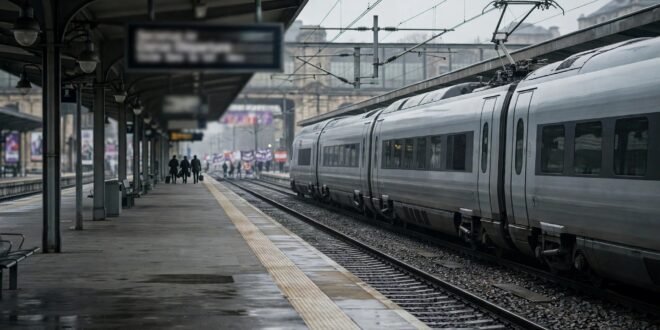
Transport is where travellers feel French strikes first, but precision matters here. A strike notice is not the same as a confirmed shutdown: a notice legally allows the staff it covers to stop work during the stated period, and services can run normally on days when few choose to strike.
What is known so far:
- The CGT-RATP filed a strike notice on 12 November covering management staff at the Paris transport operator from 16 November until 31 December — a period that includes 1 December — but the notice concerns management grades and does not by itself predict closures on the Métro, buses, trams or RER
- No new national SNCF strike day has been officially confirmed specifically for 1 December, though rail unions are part of the wider movement and notices can be activated at shorter range
- Disruption is most reliably expected in schools, town halls, hospitals and other public services, where the eight unions' call applies directly
Operators typically publish detailed traffic forecasts 48 hours ahead. Anyone travelling on 1 December should check their train or flight the evening before, allow generous margins for connections, and remember that regional services often run closer to normal than Paris routes. Parents should also watch for announcements from their local school authority, since primary schools — where teachers must declare their intention to strike in advance — usually confirm closures or reduced childcare cover two to three days beforehand, while hospitals postpone non-urgent appointments rather than cancelling emergency care.
The Politics Behind the France December 1 Strike
The strike lands in the middle of the 2027 budget battle, and both sides know it. The unions are testing whether repeated one-day actions can force concessions on pay before the budget is finalised; the government is betting that a structured month of talks, running to the 11 December meeting, can take the heat out of the dispute without reopening its spending plans. Turnout on 1 December — measured against 17 November's — will decide which side reads the day as a victory, and whether a fifth day of action follows before Christmas.
Also visit our other websites: GulfCareers — Jobs in Dubai, UAE & Gulf | IndeedOne — Jobs and Information