EuroDaily News and Guidance, Every Day

Related Articles


Spain election rights setbacks have become one of the defining arguments of the final week before Sunday's general election, after Amnesty International published a detailed review of the parties' programmes and warned that dozens of their proposals would roll back existing protections.
The human rights organisation examined 267 measures across the programmes of five national parties contesting the 29 November vote. It sorted them into three groups: proposals that could expand rights, proposals whose effect would depend on how they were implemented, and measures that, in Amnesty's judgement, clearly represent a setback. It placed 57 measures in that third category, and found them overwhelmingly in the programmes of the conservative People's Party (PP) and the far-right Vox, the two parties that final opinion polls suggest are on course to govern together.
Where Amnesty Sees Spain Election Rights Setbacks
Housing is one of the sharpest areas of disagreement. Both the PP and Vox intend to repeal the Housing Law, a move that would abolish the stressed-area designations and rental reference indices used to contain prices in the most pressured markets. Amnesty argues that dismantling those tools would contravene the principle that states should not backtrack on the protection of social rights. It does credit the PP's promise to build one million homes as potentially positive, while noting that the programme does not clarify whether those homes would be publicly owned.
On access to support, Amnesty objects to Vox's proposal to reserve preferential access to protected housing, aid and public services through so-called national priority, which the organisation says links basic benefits to nationality and introduces discrimination. It also raises concerns across the programmes on protections concerning gender violence, abortion and trans people, areas where Spanish legislation has expanded significantly over the past decade and where the right's manifestos propose changes.
Migration Proposals Draw the Strongest Criticism
Migration draws Amnesty's most detailed objections. The organisation questions the fast returns and abbreviated procedures proposed by both parties, warning that accelerating procedures can prevent each case from being properly assessed and can undermine guarantees of legal assistance, interpretation and international protection.
The PP's programme contemplates identifying migrants within a maximum of seven days and expediting returns. For unaccompanied minors, it prioritises return, sets a 72-hour period for determining age and proposes creating an offence of age fraud. Amnesty says such initiatives reduce individual safeguards and risk criminalising children. Vox, for its part, proposes permanently preventing the regularisation of people who entered irregularly and restricting organisations that provide humanitarian aid, measures Amnesty warns would condemn migrants to an irregular status with no way out.
The Political Stakes Before Sunday
The report lands in a campaign already dominated by housing affordability, immigration, corruption and train safety. Monday was the last day on which polls could legally be published before the pre-election ban, and almost every survey put the PP and Vox above the 176 seats needed for an absolute majority in the 350-seat Congress, despite recent gains by Pedro Sánchez's Socialists. The state pollster CIS remained the outlier, suggesting the combined left could still prevail.
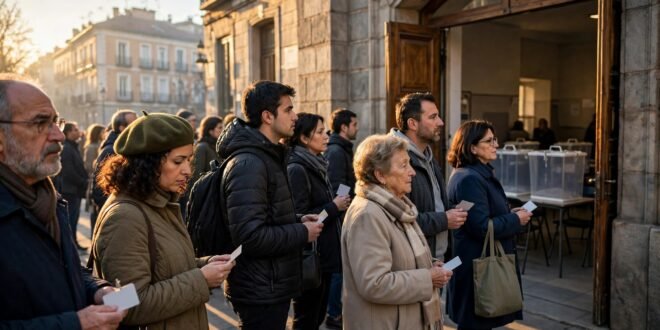
The campaign's final days have underlined how polarised the contest has become. Sánchez used a rally in Córdoba, attended by more than 5,000 supporters, to call for a historic mobilisation and set his camp a target of 176 progressive seats in Congress, while around 200 figures from Spain's cultural sector, including the actor Javier Bardem, publicly endorsed the left alliance Frente Amplio. Spain's trade unions, meanwhile, presented 150 demands to the parties ahead of the vote, pressing whoever governs next on wages, pensions and job security. Campaigning now enters its final stretch, with a day of reflection on Saturday before polling stations open on Sunday morning.
For voters, the Amnesty analysis reframes the choice: not only which bloc wins, but what happens to rights built up over recent years if it does. Whether the Spain election rights setbacks identified this week materialise will depend on Sunday's result — and on the coalition arithmetic that follows it.
Also visit our other websites: GulfCareers — Jobs in Dubai, UAE & Gulf | IndeedOne — Jobs and Information