EuroDaily News and Guidance, Every Day
Related Articles


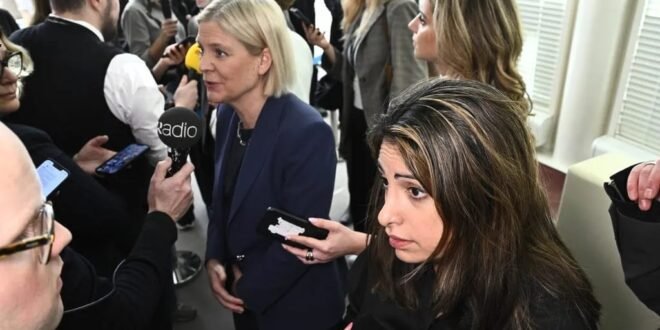
The Sweden government deadlock tightened its grip on Tuesday, 71 days after election day, as the Left Party formally rejected the Social Democrats' offer to open negotiations on a government partnership and refused to drop its demand for ministerial posts. The rejection pushes the crisis into a decisive week of talks with the Speaker of the Riksdag, with a third prime ministerial vote expected before the end of November.
The Sweden Government Deadlock: An Offer Dismissed as a Campaign
The Social Democrats, the Greens and the Centre Party had put together an 18-point "starter pack" for the Left Party, offering it a place in an inner cabinet, a package of policy proposals including an end to unfair deportations and transitional provisions for citizenship, and an apology. The Left Party's leadership dismissed the offer as a campaign exercise rather than a genuine basis for negotiation, and several of the party's districts have publicly backed the leadership's line that it will not back down from demanding seats in the cabinet itself.
That demand is the red line at the heart of the Sweden government deadlock. Left Party leader Nooshi Dadgostar insists her party must sit in government if it is to support one, while the Centre Party refuses to accept a government in which the Left holds cabinet seats — the single disagreement that has kept the Sweden government deadlock frozen for more than two months. The party leaders must now tell Speaker Andreas Norlén how they want to proceed.
The Arithmetic That Will Not Move
The numbers behind the Sweden government deadlock have not shifted since the election on 13 September. The four centre-left parties — the Social Democrats, the Left Party, the Centre Party and the Greens — hold 176 of the Riksdag's 349 seats, against 173 for the parties aligned with the outgoing right-wing government. On paper a centre-left majority exists; in practice the bloc cannot agree on who sits at the cabinet table.
Two of the four prime ministerial votes allowed under the constitution have already been used. The Riksdag rejected Social Democratic leader Magdalena Andersson in mid-October, and on 3 November it voted down Centre Party leader Elisabeth Thand Ringqvist by 324 votes to 25. Thand Ringqvist said on 15 November that her party would negotiate first on Andersson's programme, closing the door for now on caretaker Prime Minister Ulf Kristersson's proposed minority government of Moderates, Christian Democrats, Liberals and the Centre Party. Kristersson, tasked by the Speaker with exploring a centre-right combination, has asked for a few more days before being put to a vote.
A Christmas Deadline and a Possible Snap Election
Norlén has given the parties one more week of exploratory talks, after which he will hold fresh individual rounds with all eight party leaders. He has set a hard end point for the Sweden government deadlock: when Swedes celebrate Christmas, they should know either that the country has a new government or that it is preparing for an extraordinary election. He has said he will not let the process drift past the New Year as the 2018–19 formation crisis did.
If the third vote fails, a fourth will be held in good time before Christmas. If that fails too, an extraordinary election must follow within three months — something that has never happened under Sweden's current constitution, in force since 1975. The deadlock leaves Sweden under a caretaker government through the budget season and into the winter, and patience is wearing thin: a Novus poll published on 18 November put the Moderates ahead of the Social Democrats, 26.5 per cent to 24.9 per cent. For now, the Sweden government deadlock remains exactly where the voters left it in September — with every bloc able to block, and none able to govern.
Also visit our other websites: GulfCareers — Jobs in Dubai, UAE & Gulf | IndeedOne — Jobs and Information