EuroDaily News and Guidance, Every Day

Related Articles



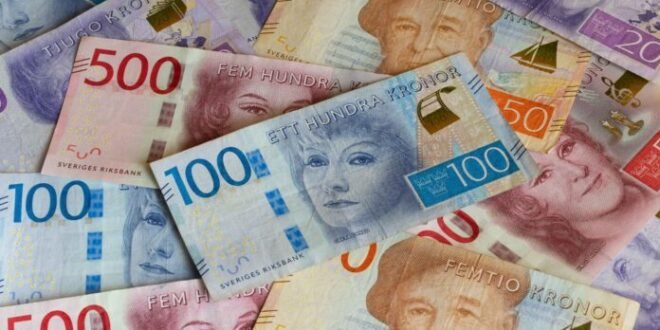
The Swedish krona has slipped to its weakest level since the beginning of April 2025, with one US dollar now costing more than 10 kronor and the euro changing hands at 11.38 kronor, according to TT News Agency reporting published by Sweden Herald. Market data on Monday morning put the dollar at about 10.21 kronor, close to the 52-week high for the currency pair recorded last week.
The slide caps a difficult year for Sweden's currency. Since the turn of the year, the krona has lost almost 80 öre against the dollar and around 55 öre against the euro, according to TT. Sweden Herald's weekend roundup of the Swedish press noted that the krona has fallen nearly 10 per cent against the US dollar this year, the weakest performance among the world's most traded G10 currencies.
A Year of Steady Decline
The krona's weakness is not a sudden crash but a long grind lower. Each bout of turbulence in global interest rate and currency markets has pushed investors towards the dollar and other perceived safe havens, and the Swedish currency, issued by a small and open economy, has repeatedly been left exposed.
That pattern is familiar to currency analysts. The krona tends to weaken when global risk appetite fades, because international investors treat it as a cyclical currency rather than a refuge. Danske Bank's foreign exchange desk has previously identified the krona as the G10 currency hit hardest when geopolitical tensions push money into safe assets, and this year's slide has followed the same script.
Why a Weak Krona Cuts Both Ways
For Sweden's exporters, a cheaper krona is not all bad news. Engineering groups, forest products companies and other exporters earn much of their revenue in dollars and euros, so a weaker exchange rate flatters their earnings when converted back into kronor and can make Swedish goods more competitive abroad.
The costs land elsewhere. Imported goods, foreign travel and energy priced in dollars become more expensive, feeding through to household budgets at a time when families are still sensitive to price rises after the inflation shock of recent years. A persistently weak currency also complicates life for the Riksbank, because it can import inflation even when domestic demand is soft.
The Riksbank Watches and Waits
So far, the central bank has shown little appetite to respond with higher interest rates. Riksbank Governor Erik Thedéen said a December interest rate hike is unlikely, according to Sweden Herald, suggesting policymakers see the currency's slide as driven mainly by global market turbulence rather than by overheating at home.
That leaves the krona at the mercy of international markets heading into the end of the year. If global sentiment steadies, the currency could recover some ground quickly, as it has after previous sell-offs. But for now, Swedes paying for imports, booking winter holidays abroad or watching the exchange rate ticker are dealing with the weakest krona in more than a year and a half — and with little sign that the pressure will lift before Christmas.
Traders will therefore watch the Riksbank's December meeting closely for any change in tone, even if few expect the policy rate itself to move. Until then, the exchange rate remains the most visible daily reminder of Sweden's exposure to a turbulent world economy.
Also visit our other websites: GulfCareers — Jobs in Dubai, UAE & Gulf | IndeedOne — Jobs and Information