EuroDaily News and Guidance, Every Day

Related Articles



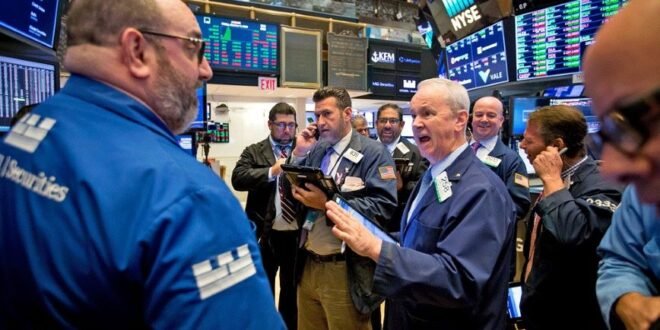
The Wall Street correction deepens became the only story in US markets on Friday, as the S&P 500 fell 3.7% to close at 6,910.39 — its seventh consecutive daily loss and its longest losing streak since 2020. The fall left the index down 8.6% for the week and more than 10% below its record high, the threshold traders use to define a correction.
The Nasdaq fared even worse. It dropped 5.3% on Friday alone and 10.4% across the week, its worst week since 2020, wiping out all of its gains for 2026. The Dow Jones Industrial Average fell 2% on the day and 8% over the week, and it too is now more than 10% below its record high.
Fear Returns to the Market
The clearest sign of the changed mood was the VIX, the index that tracks expected volatility and is often called Wall Street's fear gauge. It pushed above 30 for the first time since March and April 2025, a level associated with genuine investor anxiety rather than routine profit-taking.
A year that rewarded buyers of almost every dip has suddenly started punishing them. Seven straight losing sessions change behaviour: investors who would normally step in after two or three down days begin to wait, and that hesitation itself keeps prices under pressure.
Wall Street Correction Deepens as AI Shares Slide
At the centre of the sell-off is a sharp repricing of artificial intelligence shares, the sector that carried the market to its records. Nvidia, the chipmaker at the heart of the AI boom, has been hit by a leadership crisis following the resignation of Jensen Huang, alongside an SEC accounting investigation and a probe into chip exports.
The damage spread across the sector. Anthropic's newly listed shares slid again in their second session of trading, and evidence of a slowing buildout of data centres added to the sense that the AI investment wave is pausing. Rising interest rates completed the picture, giving investors a reason to question the valuations of companies whose profits lie far in the future.
A Federal Reserve Headache
The market slide lands at an awkward moment for the Federal Reserve. According to the CME FedWatch tool, traders now put the odds of a 25-basis-point rate hike in December at 88.6% — a remarkable position for a central bank that markets spent much of the year expecting to ease policy.
Higher rates raise the cost of borrowing for companies and households alike, and they make the future earnings of high-growth technology firms worth less in today's money. That arithmetic is a large part of why the selling has concentrated so heavily on the AI and chip names.
What Happens Next
Attention now turns to Monday's opening for the first test of whether buyers judge the lower prices a bargain or the start of a deeper fall. Corrections of this size are not unusual in long bull markets, and they can end quickly. But with both the S&P 500 and the Dow in correction territory, a fear gauge above 30 and the central bank leaning towards a hike, the burden of proof has shifted to the bulls.
Also visit our other websites: GulfCareers — Jobs in Dubai, UAE & Gulf | IndeedOne — Jobs and Information