 EuroDaily News and Guidance, Every Day
Related Articles

A German raw materials trading house is at the centre of a new industry-led plan to secure Germany's access to the critical metals and minerals its factories depend on, after leading industry groups and companies warned that dependence on a handful of supplier countries is threatening the country's competitiveness.
The groups, which include carmaker BMW and defence group Rheinmetall, said late on Monday that they had signed a memorandum of understanding to establish the trading house, with preparations expected to run until mid-2027. The initiative is designed to give German industry a collective instrument in markets where individual companies, however large, often negotiate alone against state-backed buyers and dominant suppliers.
What the German Raw Materials Trading House Would Do
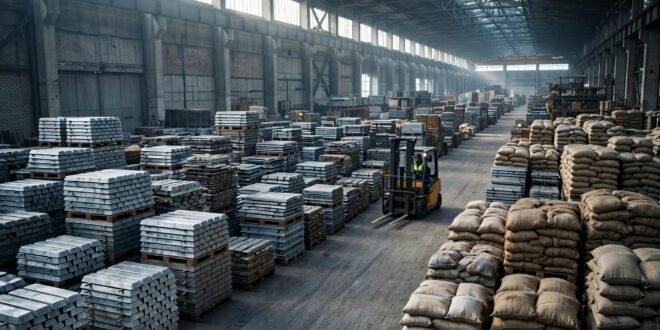
According to the signatories, the proposed trading house would pool the demand of participating companies, procure and trade raw materials on their behalf, build strategic stockpiles of critical inputs and invest along supply chains, from mining and processing projects to long-term supply contracts. Stockpiling is a notable shift for an industry built on just-in-time production: it accepts that holding reserves of scarce materials is now an insurance policy worth paying for.
The plan reflects a hard lesson from recent years. German manufacturers of cars, machinery, batteries and defence equipment rely heavily on materials such as lithium, cobalt, rare earths and graphite, much of whose processing is concentrated in very few countries. Export restrictions, price spikes or political disputes in those markets can halt production lines in Germany within weeks, a vulnerability that executives and ministers have repeatedly flagged since supply chains seized up earlier this decade.
Why German Industry Is Acting Now
The timing is no coincidence. Germany's industrial model is under strain from high energy costs, US tariffs and intense competition from China, and the government's own economic advisers expect only modest growth this year despite a large public spending programme on infrastructure and defence. Defence expansion in particular has sharply increased demand for metals and electronic components, while the car industry's shift to electric vehicles has multiplied its need for battery materials.
Industry leaders have increasingly argued that Germany cannot leave access to those materials entirely to spot markets or to the purchasing power of individual firms. A shared trading house, they contend, would give mid-sized suppliers in the Mittelstand, the backbone of German manufacturing, the same collective leverage that larger rivals enjoy, and would align private procurement with the strategic stockpiling that governments already practise for oil and gas.
The initiative also lands in the middle of a wider European debate about economic security. The European Union has set targets to diversify supplies of critical raw materials and reduce dependence on any single third country for processing, and Berlin has previously explored state-backed instruments, including a national raw materials fund, to support mining and processing projects abroad. An industry-run trading house would complement rather than replace those public efforts, and its backers argue that private procurement expertise, combined with collective buying power, can move faster than government programmes. Sceptics will watch whether competing companies can genuinely cooperate on purchasing materials they all need, and whether the venture attracts enough members beyond its founding names to carry real weight in global markets.
What Happens Next
Preparations are expected to run until mid-2027, and significant questions remain: how the trading house will be financed, which materials it will prioritise, how stockpiles will be governed, and how the venture will fit with European Union efforts to diversify supply under the bloc's critical raw materials strategy. The German raw materials trading house is, for now, a memorandum rather than a market force. But its creation by some of the country's best-known industrial names signals how seriously German industry now treats the risk that the materials it needs most may not always be there at any price.
Also visit our other websites: GulfCareers — Jobs in Dubai, UAE & Gulf | IndeedOne — Jobs and Information
