 EuroDaily News and Guidance, Every Day

Related Articles



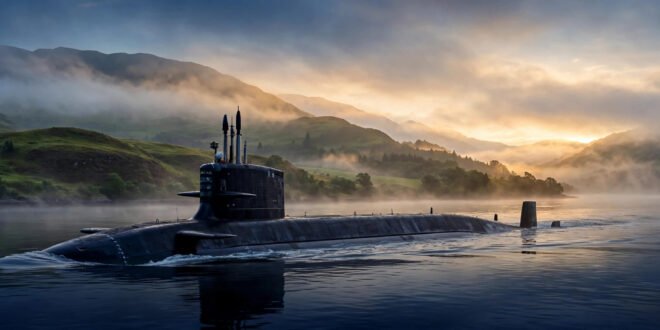
A Royal Navy submarine carrying Trident nuclear missiles has returned to its Scottish base after a record-breaking 217 days spent submerged on patrol. HMS Vengeance sailed into HM Naval Base Clyde at Faslane, near Helensburgh, on Sunday, ending a deployment that began on 12 April and lasted more than seven months. The HMS Vengeance record patrol 217 days is reported to be the longest continuous undersea patrol by a British vessel, surpassing the previous record of 205 days set by HMS Vanguard in April.
The 140-strong crew spent the tour in almost total isolation beneath the surface, in radio silence to avoid detection, after setting out from Faslane in the spring. Defence Secretary Wes Streeting was at the base to welcome them home, after what the BBC described as the longest undersea deployment at sea for a British vessel. The return ended a patrol that had been extended beyond its planned length after the submarine due to relieve Vengeance had to return to base to fix a technical fault.
Vengeance is one of four Vanguard-class ballistic missile submarines that carry Britain’s Trident nuclear deterrent, providing the continuous at-sea deterrent, known as Operation Relentless, that has been maintained without interruption for decades. The boats are designed to carry three to four months of food for a crew of about 140, and their patrols were supposed to run in three-month cycles. In recent years, those patrols have grown far longer.
HMS Vengeance Record Patrol 217 Days: How the Record Was Set
HMS Vengeance departed Faslane on 12 April and remained submerged for 217 days before returning on Sunday 15 November. The previous record for a Royal Navy continuous undersea patrol was reported to have been set by HMS Vanguard in April, when it returned to Faslane after 205 days at sea. Vengeance’s patrol exceeded that by 12 days, and it is the latest in a series of very long patrols: six of the previous seven patrols by the Vanguard-class boats have lasted more than 200 days, according to The Times.
The patrol was not meant to last as long as it did. Vengeance was expected back at Faslane the previous weekend, but its return was delayed when the submarine due to replace it on patrol, HMS Vanguard, had to return to base with a technical fault. Vanguard was repaired at Faslane and returned to sea on Tuesday to take over the deterrent patrol, but the delay extended Vengeance’s time underwater by about a week.
When Vengeance finally sailed up Gare Loch, the signs of its long deployment were visible: marine growth covered its hull, and some of its sound-absorbing tiles were missing. The Times, which joined the defence secretary aboard the vessel’s return, reported that the barnacles, rust and algae coating the submarine’s stealth plating told the story of a boat pushed to the brink. The vessel is a £6 billion submarine, armed with up to 16 Trident ballistic missiles, and it is among four ageing deterrent boats that safeguard, in the words of one report, “one billion souls” within NATO.
Life Aboard: 217 Days Without Sunlight
For the 140 sailors aboard, the patrol meant seven months without sunlight, fresh air, or the ability to reply to a single message from home. Submariners on deterrent patrol live in total isolation to ensure they are undetected and can launch nuclear missiles at any moment. They cannot be resupplied at sea, and the boats maintain radio silence throughout the deployment, which means families hear nothing from their loved ones for months at a time.
The psychological and physical demands of such a long patrol are considerable. Crews work in shifts around the clock, in a steel tube 150 metres long, with limited space, recycled air and artificial light. Food is carefully planned, but after months at sea the variety diminishes. Exercise is limited, privacy is scarce, and the knowledge that the boat must remain undetected adds a constant pressure that does not exist in other forms of service.
David Cullen, a nuclear expert at the Basic thinktank, noted that patrols are becoming increasingly longer, and the length of Vengeance’s deployment has raised questions about the strains placed on sailors and the reliability of ageing submarines sent on extended missions. The Royal Navy has acknowledged the demands on its crews, and the welcome home at Faslane, with families waiting on the jetty, is one of the most emotional moments in the naval calendar.
Why Patrols Have Become So Long
The typical patrol length for the UK’s Vanguard-class ballistic missile submarines has more than doubled in recent years, with six-month durations now routine due to a shortage of seaworthy vessels. The four boats are ageing, and maintenance is taking longer than planned. HMS Victorious is currently in dry dock undergoing deep maintenance that cost £560 million and began in 2023, which leaves fewer boats available to maintain the continuous patrol.
That shortage has a direct effect on patrol lengths. With only three boats available at any one time, and one of them in maintenance, the boats at sea must stay out longer to ensure that a submarine is always on patrol. The result is a cycle in which long patrols cause more wear on the boats, which in turn requires more maintenance, which further reduces availability. Breaking that cycle is one of the Royal Navy’s most pressing challenges.
The Ministry of Defence plans to replace the four Vanguard boats with four Dreadnought-class submarines from the early 2030s. The new boats are being built at Barrow-in-Furness, and they are intended to carry the deterrent into the second half of the century. Until they arrive, however, the Vanguard class must keep the continuous at-sea deterrent going, and the strain on the boats and their crews is likely to continue.
What Happens to the Crew Now
For the crew of HMS Vengeance, the return to Faslane marks the end of the longest deployment of their careers, and the beginning of a period of leave, reunion and recovery. Families who have waited for seven months will finally see their loved ones, and the crew will have time to rest before the boat begins its own period of maintenance and preparation for its next patrol.
The Navy will also want to learn from the deployment. A 217-day patrol is a test of the boat, its systems and its people, and the experience will feed into decisions about maintenance, supplies and crew support for future patrols. The missing sound-absorbing tiles and the marine growth on the hull are reminders that a submarine that stays at sea for seven months comes back needing work, and that work must be done before the boat can go out again.
The Deterrent Debate
The return of HMS Vengeance has also brought the nuclear deterrent back into political debate. Defence Secretary Wes Streeting used the occasion to tell Russia that Britain’s nuclear weapons are “not up for negotiation”, rejecting President Putin’s demand for the UK to stop protecting NATO with ballistic missiles. Speaking to The Times as Vengeance sailed home, Streeting described Putin’s demand as “delusional”.
The deterrent is one of the most expensive and most contested parts of British defence policy. Supporters argue that it is the ultimate guarantee of national security, and that the continuous at-sea deterrent is the most credible form of it, because a submarine at sea cannot be targeted in a first strike. Critics argue that the money could be better spent on conventional forces, and that the deterrent’s value in the modern world is overstated.
What is not in dispute is that the system depends on the boats and their crews. A deterrent that cannot be maintained, or that exhausts the people who operate it, is a deterrent in name only. The record patrol of HMS Vengeance is both a demonstration of the Royal Navy’s professionalism and a warning about the pressure the fleet is under.
For more on maritime incidents and investigations, see our report on the NTSB tanker steering failure inquiry.
Sources: Bucks County Tribune, The Times, Army Recognition.
Also visit our other websites: GulfCareers — Jobs in Dubai, UAE & Gulf | IndeedOne — Jobs and Information
