EuroDaily News and Guidance, Every Day
Related Articles



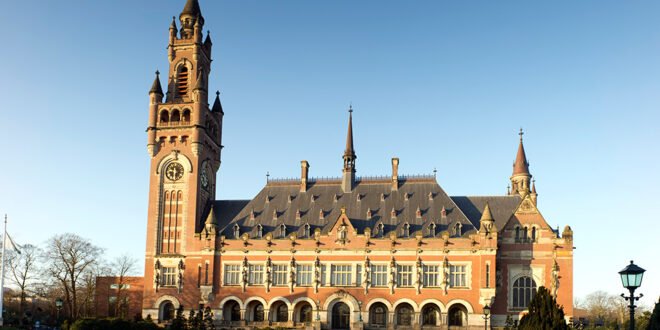
The ICJ genocide ruling delivered in The Hague on Thursday 19 November is a landmark in international law: for the first time in its history, the International Court of Justice has found that a state committed genocide. By nine votes to six, the court's judges ruled that Myanmar committed genocide against the Rohingya in northern Rakhine State, in violation of the 1948 Genocide Convention. The decision is final and cannot be appealed.
What the Court Found
President Yuji Iwasawa read the judgment over some three hours in the Peace Palace's Great Hall of Justice. The court found that Myanmar's security forces killed thousands of Rohingya during the 2017 "clearance operations" — the evidence supporting an estimate of 10,000 people violently killed — and committed widespread sexual violence and acts of extreme violence against children. Rohingya villages were systematically destroyed and replaced with non-Rohingya inhabitants, and the judges concluded that the "only reasonable inference" was that Myanmar intended to destroy the group in part — the specific intent that defines genocide in law.
The ruling resolved six violations of the Convention, Le Monde reported, and found Myanmar responsible for three of the five categories of genocidal acts listed in the treaty. The court also held that Myanmar violated its obligation to prevent genocide. The 2017 crackdown drove more than 730,000 Rohingya to flee to neighbouring Bangladesh, where most remain in refugee camps around Cox's Bazar.
What Myanmar Has Been Ordered to Do
The judges went beyond a declaration. Myanmar must cease all acts of violence, and take immediate and effective steps to investigate all persons suspected of culpability, prosecute and punish the guilty, and provide guarantees of non-repetition. In a landmark reparations order, the court required restitution: Myanmar must allow and facilitate the safe, voluntary and dignified return of the Rohingya who fled, return or replace collective property that was damaged, facilitate the search for the disappeared and ensure proper burials, and provide for the physical and psychological rehabilitation of survivors.
The court said it could not determine the amount of compensation itself, and ordered Myanmar to submit a report within two years outlining a plan.
A Case Brought by The Gambia
The case was filed in November 2019 by The Gambia, a small, predominantly Muslim West African state acting under the Genocide Convention's provision allowing any party to sue over breaches. Eleven states intervened in support — among them the United Kingdom, Germany, France, the Netherlands, Canada, Belgium, Denmark, Ireland, Slovenia, the Maldives and the Democratic Republic of the Congo. Rohingya survivors testified before the court during the merits hearings in January 2026.
UN Special Rapporteur Kelley E. Currie welcomed the verdict: "Today the world court has called the crimes by their true name: genocide."
The Limits of the Verdict
ICJ rulings are binding, but the court has no enforcement arm of its own — compliance depends on Myanmar's rulers and on pressure from the UN Security Council and member states, and it remains to be seen whether the junta in Naypyidaw will adhere to the orders. Even so, lawyers say the ICJ genocide ruling matters far beyond Myanmar. It is the first major decision on the Genocide Convention in more than a decade, and it is being closely watched for the standards it sets on proving genocidal intent — including in South Africa's case accusing Israel of genocide in Gaza, filed in 2023. For the Rohingya in the camps, the judgment is recognition after nine years of waiting; turning it into a safe journey home is the harder part.
Also visit our other websites: GulfCareers — Jobs in Dubai, UAE & Gulf | IndeedOne — Jobs and Information