EuroDaily News and Guidance, Every Day

Related Articles
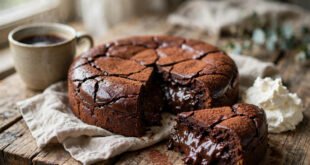
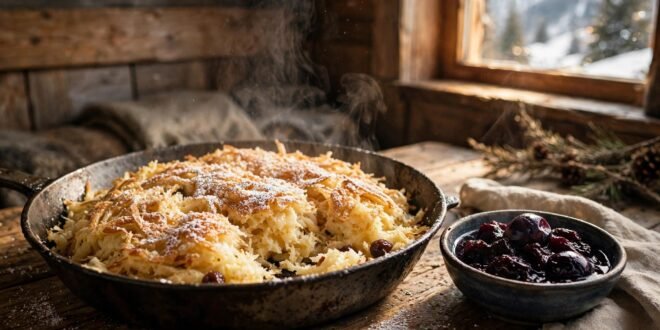
Few desserts inspire as much loyalty as the one in this Kaiserschmarrn recipe. Named after Emperor Franz Joseph I — Kaiser Franz Joseph, whose "Schmarrn", roughly "nonsense" or "rubbish", became a term of endearment — it is Austria's great gift to the sweet tooth: a thick, fluffy pancake, torn into rough pieces in the pan, caramelised in butter and sugar, and served in a heap under icing sugar. You will find it in every mountain hut in the Alps, usually in a portion big enough for two, and it is just as good at home on a cold evening.
Ingredients for This Kaiserschmarrn Recipe
- 6 eggs, separated
- 250 g plain flour
- 375 ml milk
- 3 tablespoons caster sugar, plus 1 extra tablespoon for caramelising
- 1 teaspoon vanilla sugar or a few drops of vanilla extract
- A pinch of salt
- 50 g raisins (optional), soaked in 2 tablespoons of rum or warm water for 30 minutes
- 50 g butter, for frying
- Icing sugar, for dusting
- Plum compote (Zwetschgenröster) or stewed apples, to serve
Method: Making Kaiserschmarrn Step by Step
Whisk the egg yolks with the milk, vanilla and the 3 tablespoons of sugar until smooth, then whisk in the flour to make a thick, lump-free batter, about the consistency of double cream. Let it rest for 20 to 30 minutes so the flour hydrates; this makes a noticeably lighter pancake. Stir in the drained raisins if you are using them.
In a clean bowl, whisk the egg whites with the pinch of salt to stiff peaks. Fold them into the batter in two additions, working gently with a spatula and keeping as much air as possible. This step is the whole secret of the dish: a Kaiserschmarrn should be almost soufflé-like before it is torn.
Heat half the butter in a large, heavy frying pan (about 28 cm) over medium heat until it foams. Pour in all the batter; it should be 2 to 3 cm thick. Cook undisturbed for about 3 minutes, until the underside is golden, then check by lifting an edge. Now tear the pancake into quarters with two spatulas, flip the pieces, and cook for another 2 minutes. Tear everything into bite-size, irregular chunks, add the remaining butter and sprinkle over the extra tablespoon of sugar. Toss the pieces over medium-high heat for 1 to 2 minutes until the edges turn crisp and amber with caramel.
Serving and Storing Your Kaiserschmarrn
Tip the Kaiserschmarrn onto a warm platter, dust it generously — a real snowfall — with icing sugar, and serve at once with plum compote on the side. In Austria the compote is not optional decoration but half the point: its sharpness cuts through the buttery richness. Stewed apples, apple sauce or a spoonful of lingonberry jam all work well too. In ski huts it is often served in the pan, with two forks and no ceremony.
Kaiserschmarrn is best eaten immediately, but leftovers keep for a day in the fridge and reheat surprisingly well in a dry frying pan, which revives the crisp edges; a splash of milk in the pan stops them drying out. The batter, without the whisked whites, can be made a few hours ahead and kept covered in the fridge — fold the whites in just before cooking. A word on pans: if you do not own a 28 cm pan, divide the batter between two smaller pans rather than making one very thick pancake, which would stay raw in the middle. An oven-safe pan also lets you finish the base under a hot grill for a minute if the underside is colouring too fast. Once you have mastered this basic Kaiserschmarrn recipe, try the variations the Alpine huts rotate through winter: a handful of toasted flaked almonds, a grating of lemon zest in the batter, or cherries folded through instead of raisins.