EuroDaily News and Guidance, Every Day

Related Articles

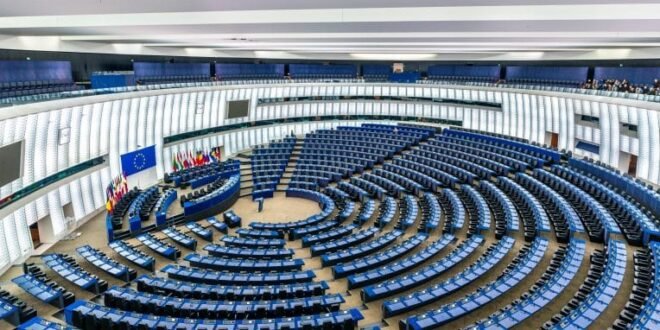
This Strasbourg plenary week, running from Monday to Thursday, looks at first glance like routine legislative housekeeping. Look closer, and it is one of the most consequential weeks of the European Parliament's year: MEPs will settle the last budget of the current financial framework, close a three-year battle over medicines law, adjust the machinery of the carbon market, and open the argument over the Union's next seven-year budget, according to the Parliament's briefing of 19 November.
The Last Budget of the Old Framework
On Wednesday, Parliament votes on the EU's 2027 budget, agreed in conciliation with the Council on 11 November at €199.7 billion in commitments and €211.5 billion in payments, including special instruments. It is the final budget under the current multiannual financial framework, and Parliament has left its fingerprints on it: more than €300 million extra for its priorities, including €30 million more for humanitarian aid, €21.5 million for Horizon Europe research and €14 million for Erasmus+. If the procedure completes, the budget applies from 1 January 2027.
The same day, MEPs debate the compromise on the 2028–2034 framework presented by European Council President António Costa, ahead of a special summit of leaders on 26–27 November. Parliament wants a more ambitious budget than governments have so far offered, pointing to competitiveness, defence, research and agriculture; member states must square those ambitions with limits on national contributions and recovery-debt repayment. Wednesday's debate adopts nothing — the framework needs unanimity among governments and Parliament's consent — but it will show how far apart the two sides remain.
Medicines: Sovereignty Meets the Price of Innovation
Wednesday also brings the second-reading vote on the pharmaceutical reform first proposed by the Commission in April 2023. The compromise gives new medicines eight years of data protection plus one year of market protection, with conditional extensions up to a combined maximum of 11 years, alongside incentives for priority antibiotics, medicines for rare diseases and products addressing unmet needs. The balance being struck is the oldest in health policy: reward the research that produces new treatments without delaying cheaper generics longer than necessary.
Alongside it sits the Critical Medicines Act, aimed at shortages that have repeatedly left pharmacies short of antibiotics, insulin and cancer drugs. Strategic industrial projects would get support to build or expand European production, and when at least five member states ask, the Commission would run joint procurement for them, with a voluntary solidarity mechanism for emergency stocks coordinated by the European Medicines Agency. Whether it works will depend less on this week's vote than on factories actually being built.
The Signal Hidden in the Carbon Market
Tuesday's quietest vote may move markets most. MEPs will decide on the ETS Market Stability Reserve, the mechanism that soaks up surplus carbon allowances: the compromise keeps the invalidation of allowances above the ceiling but raises the threshold from 400 million to 700 million, rejecting the Commission's proposal to suspend invalidation indefinitely. It is a technical change with a political message — Parliament is willing to soften the carbon market's edges, but not to dismantle its discipline. Tuesday also brings simplification votes for small mid-cap firms and a hard-fought mandate on faster environmental assessments, which passed committee by just 36 votes to 35.
Add Wednesday's consent vote on the EU–Switzerland agreements and Thursday's review of the COP31 outcome, and the week becomes a map of where the Union is heading: spending settled for one year, contested for seven; medicines treated as strategic industry; climate policy trimmed but intact. The votes will pass or fail in minutes. Their consequences will run for years.
Also visit our other websites: GulfCareers — Jobs in Dubai, UAE & Gulf | IndeedOne — Jobs and Information