EuroDaily News and Guidance, Every Day
Related Articles



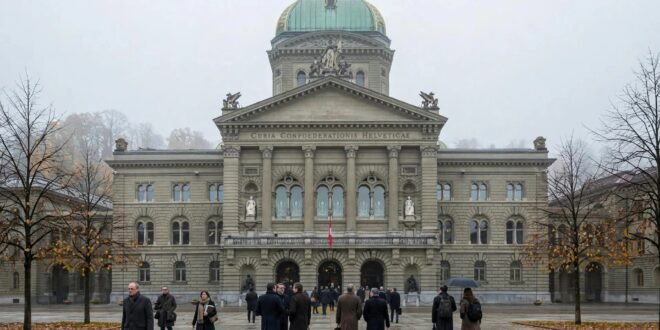
The Switzerland 2027 federal budget is heading into parliament's winter session under a cloud, after the National Council's Finance Committee voted by 15 votes to 9, with one abstention, to recommend rejecting the draft it had spent weeks examining. The committee completed its preliminary examination on 11 November and announced the result on 12 November, setting up one of the most unusual budget debates in recent Swiss history when the chambers meet from 30 November to 18 December.
The rejection was carried by an unlikely alliance. The Swiss People's Party (SVP), the Social Democrats and the Greens all voted against the draft, for very different reasons: the right argues the state spends too much, while the left objects to savings it says fall on education, asylum, international cooperation, transport and climate policy. Between them, the three parties were able to outvote the committee's supporters of the plan.
How the Switzerland 2027 Federal Budget Reached This Point
When the Federal Council presented its draft on 24 June, it projected revenue of CHF 93.7 billion and expenditure of CHF 93.8 billion for 2027, with a structural surplus of about CHF 180 million under Switzerland's debt brake. Finance Minister Karin Keller-Sutter presented the plan as evidence that the federal finances were stabilising after several years of savings packages. The package nonetheless contains around CHF 2.4 billion of cuts spread across several departments.
The committee did not simply say no. After considering more than 100 proposals, it is sending its chamber a revised text of its own, with CHF 241.5 million of additional spending and CHF 291.8 million of additional revenue compared with the Federal Council's draft, and a structural surplus of CHF 219.4 million. Committee chair Jacques Nicolet, of the SVP, said the panel had met its duty by putting a budget on the table, even though it had not managed to produce one the committee itself approved.
Two Chambers, Two Different Answers
The story then took another turn. On 18 November, the Finance Committee of the Council of States, the upper house, recommended approving the budget, voting 11 to 0 with one abstention. Switzerland's two chambers will therefore enter the winter session with opposite advice from their own finance experts, and more than 100 majority and minority proposals on the table.
The debate now moves to the full chambers in the winter session, which runs from 30 November to 18 December, with the budget accompanied by the integrated task and financial plan for 2028 to 2030. Swiss media described the committee's move as unprecedented, and the numbers show why it is so hard to resolve: the committee's own substitute text commands support as a document, but the alliance that rejected the government's draft agrees on almost nothing else. The SVP wants lower spending, the Social Democrats and Greens want the savings programme softened or reversed, and the centrist parties that backed the draft in committee are in a minority. Any final version will therefore have to be rebuilt amendment by amendment on the floor of the National Council, then reconciled with a Council of States whose committee took the opposite view by 11 votes to 0.
A committee recommendation is not a final decision, and Swiss commentators note that parliament is still expected to find a compromise, as it almost always does. A government shutdown of the American kind is considered unlikely, even in the unlikely event of a rejection, although there is no clear legal procedure for starting a year without an approved budget. What the episode has already done is expose how fragile the arithmetic of Swiss budgeting has become: a draft designed to satisfy the debt brake satisfied almost nobody else. The winter session will decide whether the Switzerland 2027 federal budget is repaired in debate or sent back to the government — a step that would be close to unprecedented.
Also visit our other websites: GulfCareers — Jobs in Dubai, UAE & Gulf | IndeedOne — Jobs and Information