EuroDaily News and Guidance, Every Day
Related Articles



US ports cyberattacks have surged in recent months, testing the ageing computer networks behind global trade, according to a Financial Times report published on Sunday — with America's biggest crude export hub facing hundreds, if not thousands, of attempted intrusions every day.
Corpus Christi: Hundreds of Attacks a Day
The Port of Corpus Christi in Texas, the largest US gateway for crude oil exports, ships around 2.3 million barrels of crude a day. Its chief executive, Kent Britton, told the FT that hackers are probing the port's computer networks for vulnerabilities and sending fraudulent messages impersonating senior executives, in an attempt to trick employees into granting unauthorised access.
The techniques range from automated attacks — password-guessing and network flooding — to sophisticated intrusions aimed at stealing or destroying data. Corpus Christi says it has contingency measures in place to keep operating if its systems are knocked offline, but the volume underlines how exposed energy infrastructure has become.
Los Angeles and a 17 Per Cent Rise at Sea
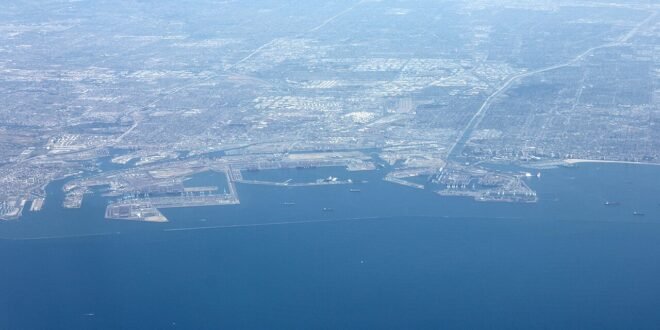
The Port of Los Angeles, America's busiest container port, reported blocking around 120 million attempted cyberattacks in August alone — nearly twice its monthly average in 2023. The attempts covered network exploitation, credential harvesting and malware, according to the FT.
The wider picture is deteriorating too. The US Coast Guard recorded a 17 per cent increase in maritime cyber incidents last year — 42 incidents across the maritime transportation system in 2025, up from 36 in 2024, with phishing used for reconnaissance or initial access in 43 per cent of cases. And in August, the Coast Guard and FBI investigated suspected cyber intrusions involving two tankers carrying crude oil and liquefied petroleum gas from the Mediterranean to Galveston, Texas, near the Strait of Gibraltar, boarding the vessels to inspect their computer systems.
Not every attack has been stopped at the firewall. Also in August, a cyberattack on the North Carolina Ports Authority delayed gate operations and forced staff to switch temporarily to manual cargo processing — a reminder of how quickly a digital incident becomes a physical queue of trucks. This month, shipping giant Maersk disclosed a data breach, although it said operations were unaffected and the incident did not involve ransomware.
Cybersecurity experts cited by the FT linked shipping-related hacking operations to countries including Iran, North Korea and China, while noting that the groups behind such attacks often route their activity through third countries. Hackers are also using AI to find and exploit vulnerabilities faster than companies can patch them.
US Ports Cyberattacks and the Regulatory Gap
Washington has begun to respond, but slowly. Coast Guard cybersecurity rules for US-flagged vessels and port facilities took effect in July 2025, yet ports do not have to submit their cybersecurity plans for approval until July 2027 — leaving a long window in which defence rests on each operator's own resources. Corpus Christi has been reported to run its cyber defence with a small team of three specialists, hiring a fourth.
Government Accountability Office auditors had already documented gaps in the Coast Guard's maritime cybersecurity framework before this year's escalation. The concern now is that attackers — increasingly using AI tools to scan for weaknesses at machine speed — are probing those gaps daily, while the compliance deadlines meant to close them are still well over a year away.
Why It Matters Beyond the Docks
Ports sit at the junction of trade and energy security: a serious breach at a hub like Corpus Christi could disrupt crude exports that markets around the world depend on. The FT noted that a recent series of major technical disruptions in the US has already laid bare the vulnerabilities of the country's critical digital infrastructure. The US ports cyberattacks wave suggests the probing is systematic, persistent and growing — and that the defences, for now, are holding by effort rather than by design.
Also visit our other websites: GulfCareers — Jobs in Dubai, UAE & Gulf | IndeedOne — Jobs and Information