EuroDaily News and Guidance, Every Day
Related Articles


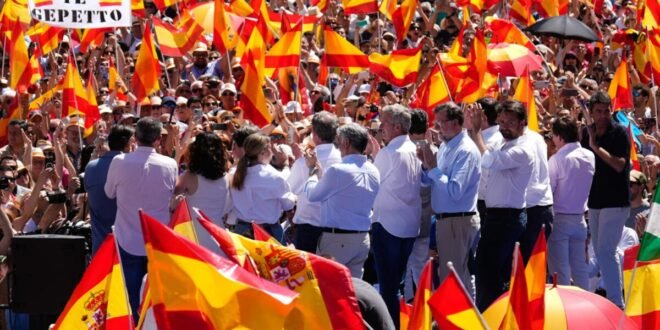
The Spain election final week began with a scene that summed up the campaign: Prime Minister Pedro Sánchez and opposition leader Alberto Núñez Feijóo held back-to-back rallies in the same city, Murcia, on Sunday, barely thirty minutes apart, as both men fought to shape the last days before Sunday's snap general election.
Spain Election Final Week Opens With Duel in Murcia
Sánchez took the stage first, at 11:30 in the morning at the Príncipe de Asturias pavilion, urging supporters to put "all on red, all on the PSOE" — a deliberate push to consolidate the progressive vote before the right can outflank the left. Feijóo followed at noon in the Plaza del Cardenal Belluga, where he warned his own base not to treat the race as settled. "We haven't won anything," he told the crowd, echoing the discipline of his televised debate performance on 19 November, when his sharpest line — "Spain deserves a decent prime minister, and he is not one" — landed in front of some 4.1 million viewers, and post-debate surveys named him the winner.
The Spain election final week map takes Feijóo to Cádiz on Monday, with further stops planned across the final stretch, including a possible rally in Alicante on Tuesday, days after he drew 12,000 people to Valencia's bullring. Both leaders are also courting younger and first-time voters online, each scheduling interviews with the YouTuber Plex, who has nearly 15 million subscribers.
What the Polls Say Going Into Sunday
An average of 19 pollsters places the Partido Popular at 30.6 per cent against 28.1 per cent for the PSOE — a lead of two and a half points. Four surveys published on Sunday all put the PP first, and projected combined PP–Vox totals of between 190 and 210 seats in the 350-seat Congress, well above the 176 needed for a majority. Ipsos, the tightest of the four, gives the PP 30.3 per cent and 127 seats against the PSOE's 29.8 per cent and 119 seats. Individual polls vary considerably in the size of the gap, but none of them shows the Socialists ahead — a consistent picture that has defined the Spain election final week from its first day.
Housing, a Rail Disaster and a Strike
This election exists because of a roof and a rail line. When parliament voted down Sánchez's emergency housing package on 2 October, he dissolved Congress and called the snap election on 5 October, ending — for now — eight years of Socialist-led government. Housing remains the dominant issue: among left-leaning voters, 62.9 per cent still name housing affordability as their primary concern, and in the debate Feijóo charged that more apartments appear in corruption case files than the government has actually built.
Three weeks into the campaign came a second shock: the rail disaster near Urda on 28 October, which killed 69 people and forced both leaders to navigate a national tragedy in mid-campaign. A general strike on 11 November then linked worker anger directly to the electoral contest. Immigration, meanwhile, is the top anxiety for 61 per cent of right-wing voters, according to post-debate polling — a defining tension of the Spain election final week, since fresh Social Security figures show nearly 3.7 million foreign affiliates, 16.4 per cent of all contributors, now fund Spain's pensions and services.
The official campaign ends on Friday 27 November, ahead of Saturday's mandatory day of reflection, when campaigning is banned. Voting takes place on Sunday 29 November. Whatever the result, the Spain election final week has already shown a country arguing about housing, trains and migration — and a prime minister fighting to prove the polls wrong one last time. By Sunday night, the Spain election final week will have answered the question the whole campaign has circled around: whether Spain wants continuity, or the "necessary change" promised on the side of Feijóo's campaign bus.
Also visit our other websites: GulfCareers — Jobs in Dubai, UAE & Gulf | IndeedOne — Jobs and Information